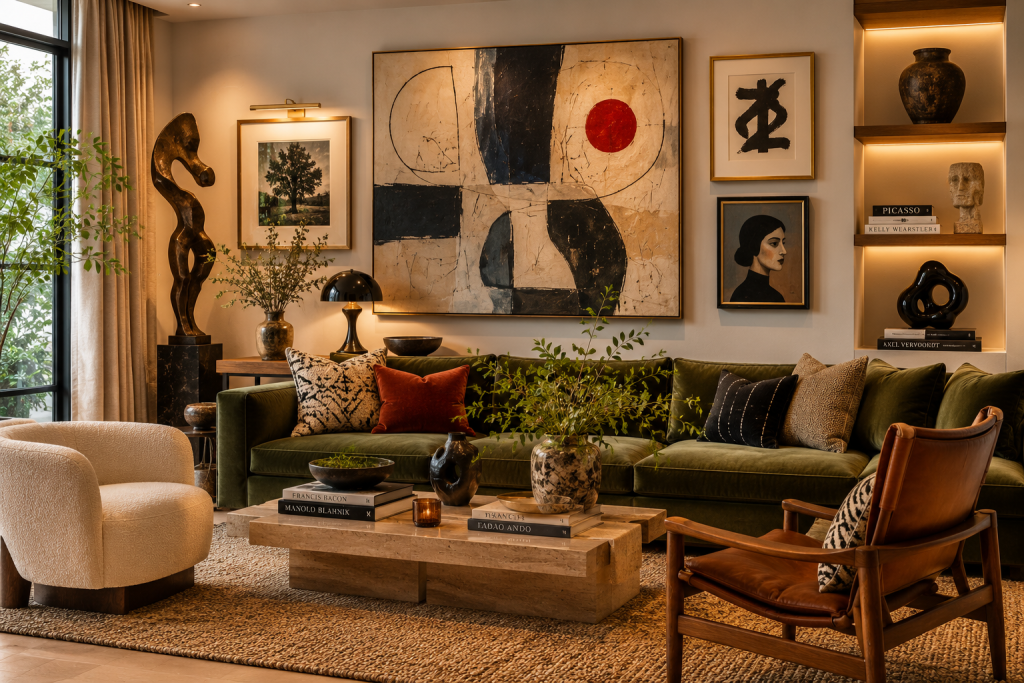

How Artwork Shapes the Way We Feel the Moment We Enter a Space
“The most memorable interiors are not always the ones we admire the most—they are the ones that turn our emotions.”
The first impression of a space is rarely formed by architecture alone. Before we consciously notice the dimensions of a room, the quality of the materials, or the details of the furniture, we experience something more immediate: an emotional response.
This response is often guided by one of the most powerful yet understated elements of interior design—art direction.
Art direction is the intentional curation of visual elements that communicate a mood, a narrative, and a personality within a space. While furniture defines function and architecture establishes structure, artwork gives a space its emotional voice. It transforms interiors from well-designed environments into memorable experiences.
For residential environments, this emotional resonance contributes to comfort and personal identity. In hospitality, it shapes guest experiences. In workplaces, it can influence creativity, culture, and wellbeing.
The Silent Language of Art
Every artwork tells a story, but more importantly, it creates a feeling.
A carefully selected piece can evoke calmness, inspire reflection, spark conversation between guests, or introduce a sense of luxury and sophistication. Unlike decorative accessories, art carries emotional weight. It has the unique ability to connect with occupants on a personal level, often without words.
When someone enters a room, their eyes are naturally drawn toward focal points. Artwork becomes an anchor for attention and emotion, shaping how the space is perceived before any other design element is consciously processed.
In this sense, art becomes a silent language—communicating atmosphere, identity, and intention.
Beyond Decoration: Creating Emotional Narratives
Successful art direction goes far beyond filling empty walls.
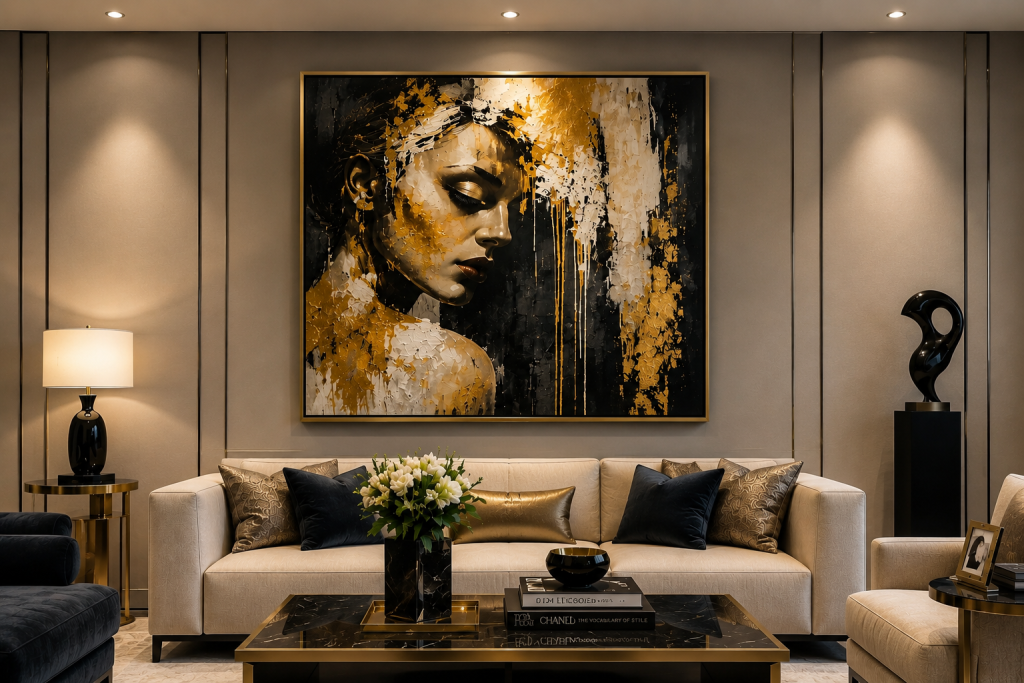
The artwork featured in LIVMOR’s residential project exemplifies this principle. Positioned as the visual centerpiece of the room, the painting introduces a compelling balance between elegance and vulnerability. The figure, viewed from behind, creates a sense of mystery and introspection, while the textured gold accents introduce warmth, richness, and a subtle sense of celebration.
The emotional dialogue between the artwork and its surroundings is intentional. The soft wall moldings create a refined architectural backdrop, while the muted palette allows the painting to command attention without overwhelming the room. Together, these elements create a narrative that feels both sophisticated and deeply human.
Rather than existing independently, the artwork becomes part of the story of the space.
The Psychology of Visual Experience
Research in environmental psychology consistently demonstrates that visual surroundings influence mood, behavior, and even stress levels.
Artwork contributes to this experience in several ways:
- Creating Comfort and Familiarity
Art that reflects human forms, natural scenes and elements, or emotionally resonant themes through abstractive projections or imagery can foster feelings of comfort and connection. It introduces a dimension of familiarity and admiration of which human senses can relate to, and that makes interiors feel lived-in rather than staged. It helps people form memories, build connections, and develop a sense of belonging within a space. - Establishing Mood
Color, composition, and texture all influence emotional perception. Soft neutral palettes tend to create tranquility, while bold contrasts generate energy and excitement. Strategic art direction allows designers to control these emotional cues with precision. - Encouraging Reflection
Thought-provoking artwork slows us down. It invites observation and interpretation, creating moments of pause within increasingly fast-paced lifestyles. - Enhancing Spatial Identity
Artwork gives a space character. Two rooms with identical layouts and furnishings can feel entirely different depending on the visual narrative introduced through art.
LIVMOR’s Approach to Art Direction
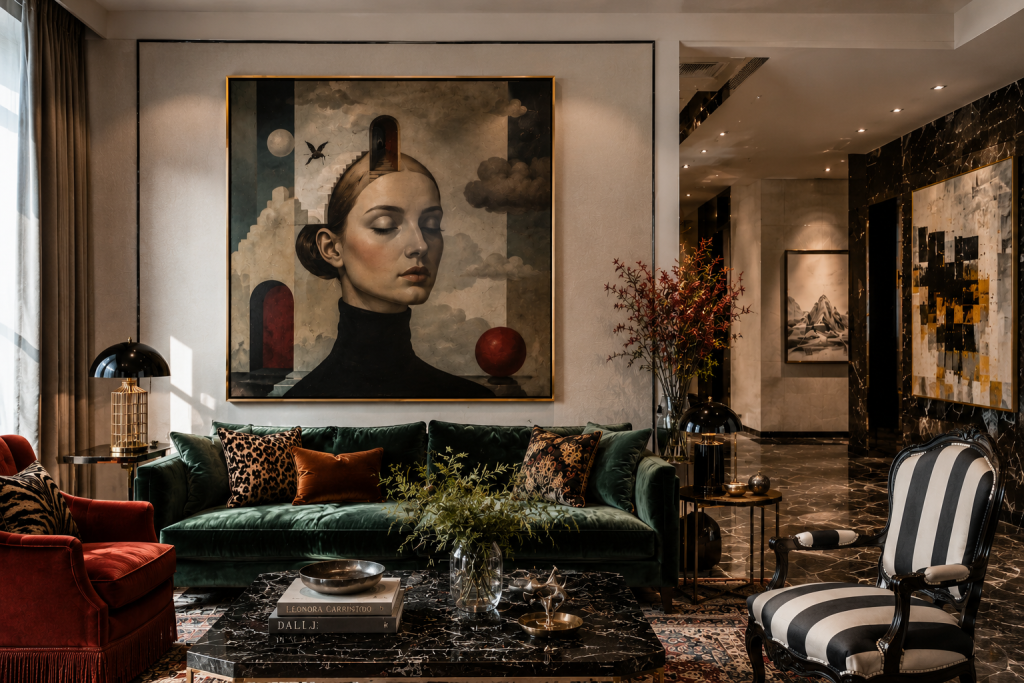
At LIVMOR, design is viewed as more than the arrangement of materials, furniture, and finishes. Every project is approached as an opportunity to create an emotional journey.
Art direction plays a vital role in this process. Through careful selection, placement, scale, and integration, artwork becomes an extension of the design narrative rather than an afterthought.
Design processes is increasingly focusing on user experience, artwork has become one of the most powerful tools available to designers to shape first impressions, influences emotions, and creates meaningful connections between people and places.
Art direction, therefore, is not merely a design exercise. It is a channel for human emotion—one that transforms spaces into stories and interiors into experiences. It gives a space its soul.
Key Parameters for Selecting Artwork
Choosing artwork for an interior requires a thoughtful balance between aesthetics, scale, personality, and context. The following parameters can serve as a practical framework for making informed art selections that enhance both the design and emotional experience of a space.
- Identification of Your Style
Before selecting any artwork, it is important to define the overall design language of the space. Whether the interior is contemporary, classic, minimalist, industrial, eclectic, or transitional, the artwork should complement and reinforce that identity. While art can introduce contrast and character, it should still feel connected to the broader design narrative rather than appearing disconnected or arbitrary.
- Measuring Scale and Proportion
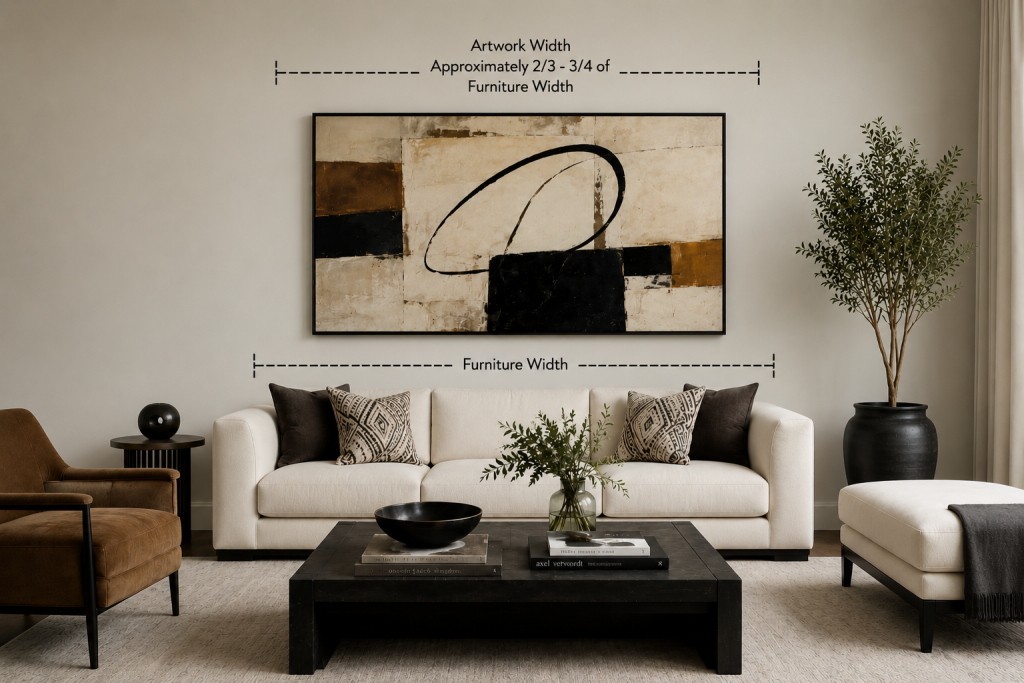
Artwork should be selected in proportion to the wall and surrounding furniture. Pieces that are too small can appear insignificant, while oversized works may overwhelm a room. As a general guideline, artwork positioned above furniture should occupy approximately two-thirds to three-quarters of the furniture’s width. Proper scale ensures visual balance and allows the artwork to function as an intentional focal point.
- Artwork Mounting Height
The height at which artwork is installed significantly affects how it is perceived. A commonly accepted principle is to position the center of the artwork at approximately eye level, typically between 145 cm and 155 cm (57–61 inches) from the floor finish level. In spaces with high ceilings or above furniture pieces, adjustments may be necessary, but maintaining visual comfort and accessibility should remain the priority.
- Considering Color Palettes
Artwork should engage in a visual dialogue with the room’s color scheme. It may either complement the existing palette through harmonious tones or introduce carefully considered accent colors that add energy and contrast. The most successful selections create balance—enhancing the space without competing with other design elements.
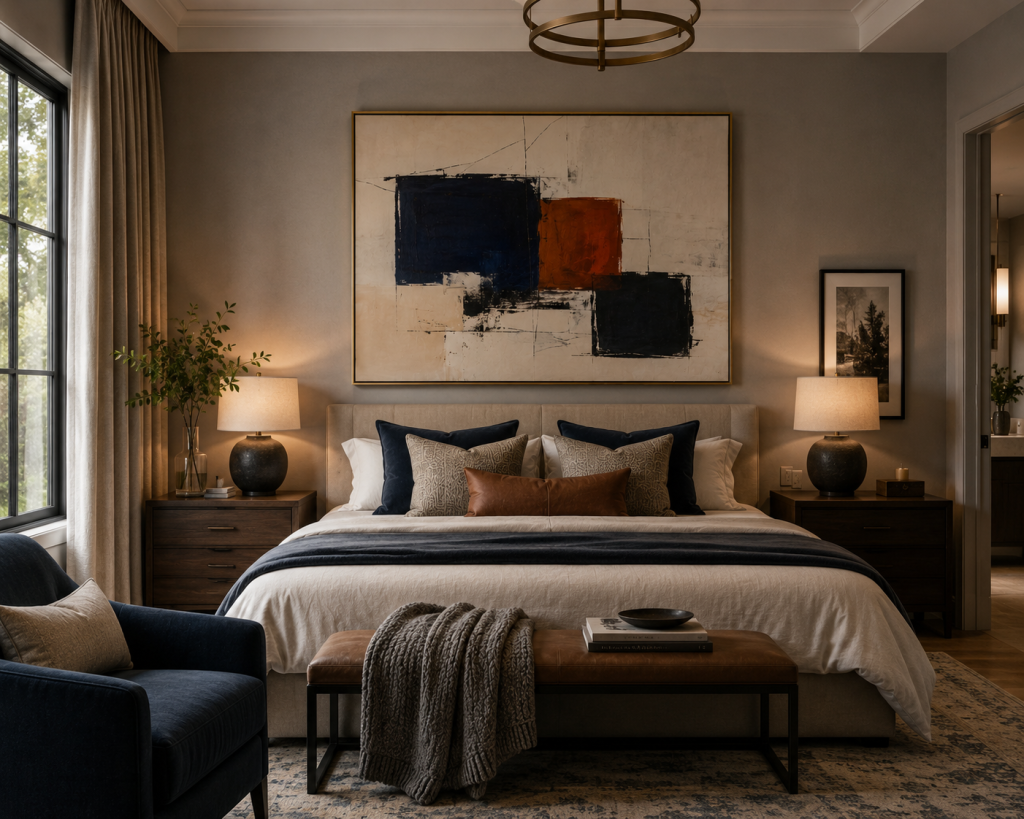
- Mixing Mediums and Textures
A well-curated interior often incorporates a variety of artistic mediums to create depth and visual interest. Paintings, photography, mixed-media works, sculptures, textiles, and digital art can coexist within the same environment when thoughtfully coordinated. The interplay of different textures and materials enriches the sensory experience and contributes to a more dynamic space.
- Evaluating the Source and Authenticity
The origin of artwork contributes significantly to its value and meaning. Pieces may be sourced from established artists, emerging local talent, galleries, private collections, artisan workshops, or commissioned specifically for a project. Understanding the story behind the artwork adds authenticity and creates a stronger emotional connection between the piece and its audience.
- Emotional Resonance and Storytelling
Beyond aesthetics, artwork should evoke a feeling, spark curiosity, or communicate a narrative. The most memorable pieces are often those that establish an emotional connection with the viewer. Whether subtle or bold, artwork should contribute to the atmosphere of the space and reinforce the experience the designer intends to create.
By evaluating artwork through these parameters—style, scale, mounting height, color palette, medium, source, and emotional impact—designers can curate collections that not only complement an interior but also elevate it into a meaningful and memorable experience.