Cairo’s architectural identity reflects centuries of cultural exchange, but few districts express its cosmopolitan heritage as clearly as Downtown Cairo, Zamalek, and Korba. Developed during Egypt’s modernization in the late nineteenth and early twentieth centuries, these neighborhoods embodied Khedive Ismail’s vision of Cairo as a world-class capital comparable to Paris and Vienna.
Downtown Cairo was planned by European architects who introduced broad boulevards, geometric streets, and elegant architectural styles. At the same time, Zamalek emerged as an exclusive residential suburb, while Korba became a distinctive blend of European, Islamic, and Art Nouveau influences.
Beyond their celebrated façades lies an equally valuable legacy: the historic interiors that once defined Cairo’s most refined homes, hotels, and public spaces. Today, preserving these interiors requires not freezing them in time, but revitalising them through design approaches that connect heritage with innovation.
The Character of Cairo’s Vintage Interiors
Downtown Cairo: Paris on the Nile
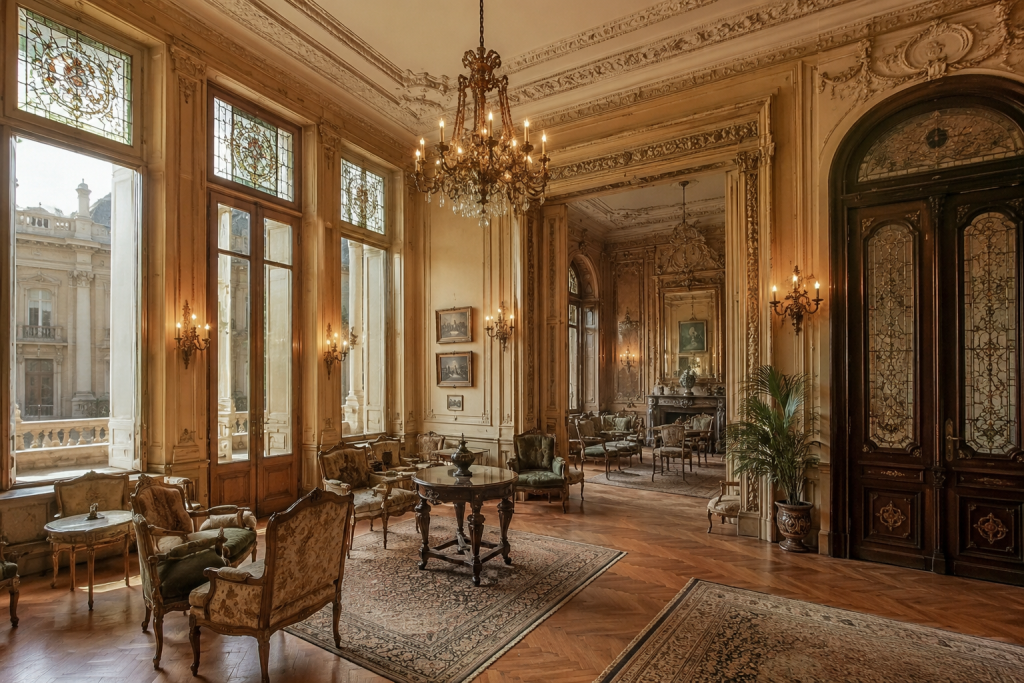
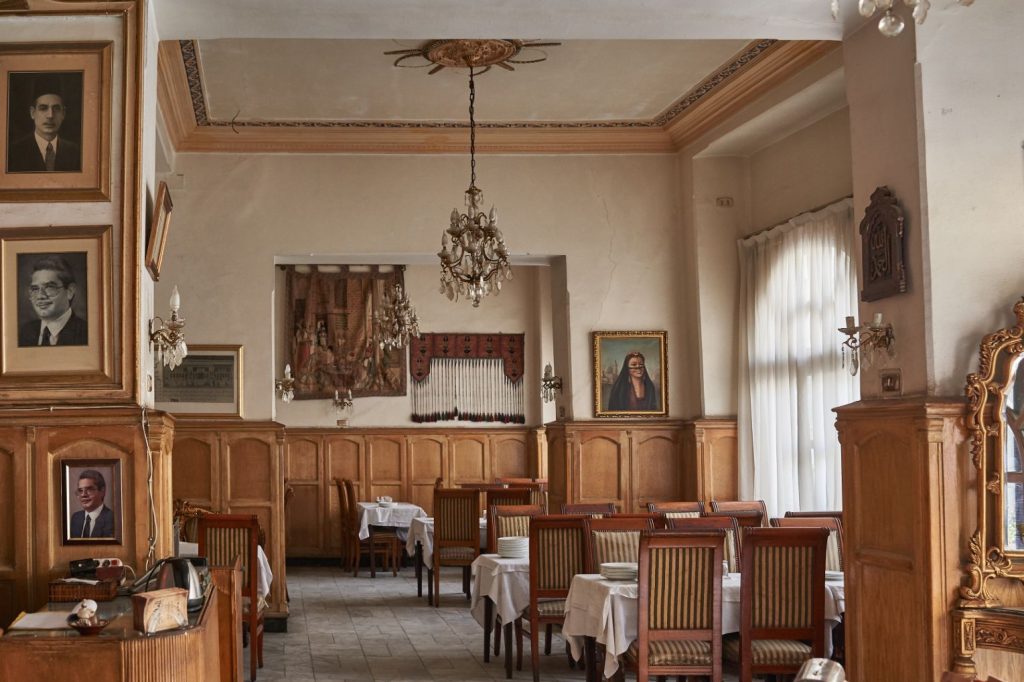
The interiors of Khedivial Cairo reflected the elegance of the European Belle Époque. High ceilings, decorative plasterwork, marble entrances, parquet floors, stained glass, and handcrafted timber doors created refined living environments.
Designed for natural light and ventilation, these interiors combined Egyptian craftsmanship with European influences, producing spaces where architecture, furniture, and decorative arts formed a cohesive whole.
Zamalek: Cosmopolitan Residential Elegance
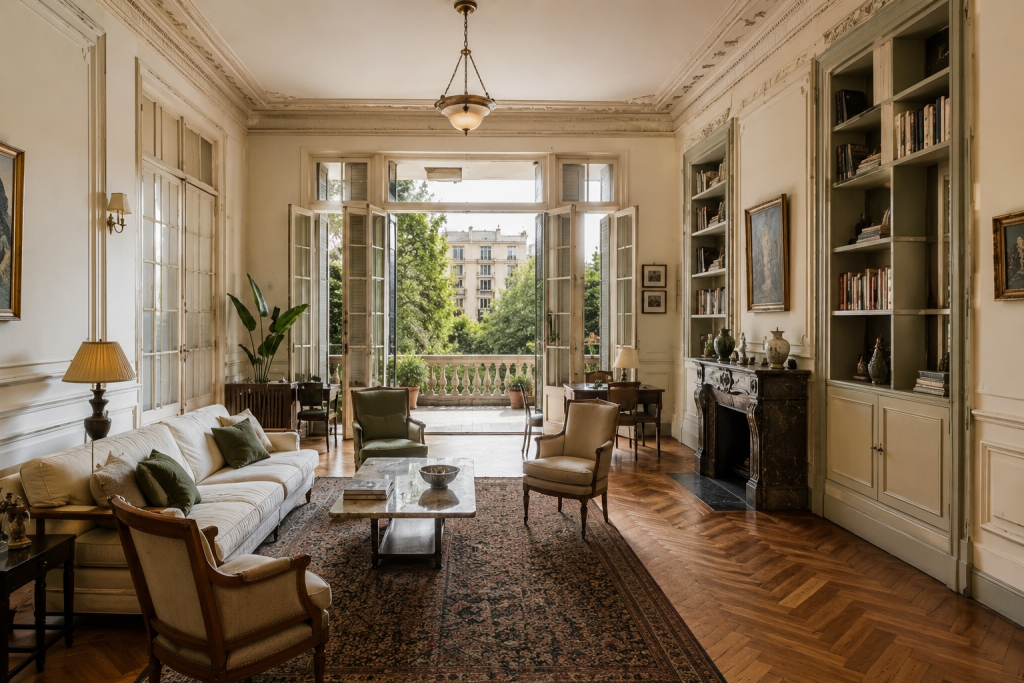
As a residential enclave for diplomats, artists, and intellectuals, Zamalek developed a softer interpretation of European modernity. Art Deco, Modernist, and Mediterranean influences shaped interiors characterized by generous proportions, timber flooring, built-in cabinetry, and elegant detailing.
Balconies, verandas, and garden-facing rooms strengthened the connection between interior spaces and the surrounding landscape.
Korba: The Fusion of East and West
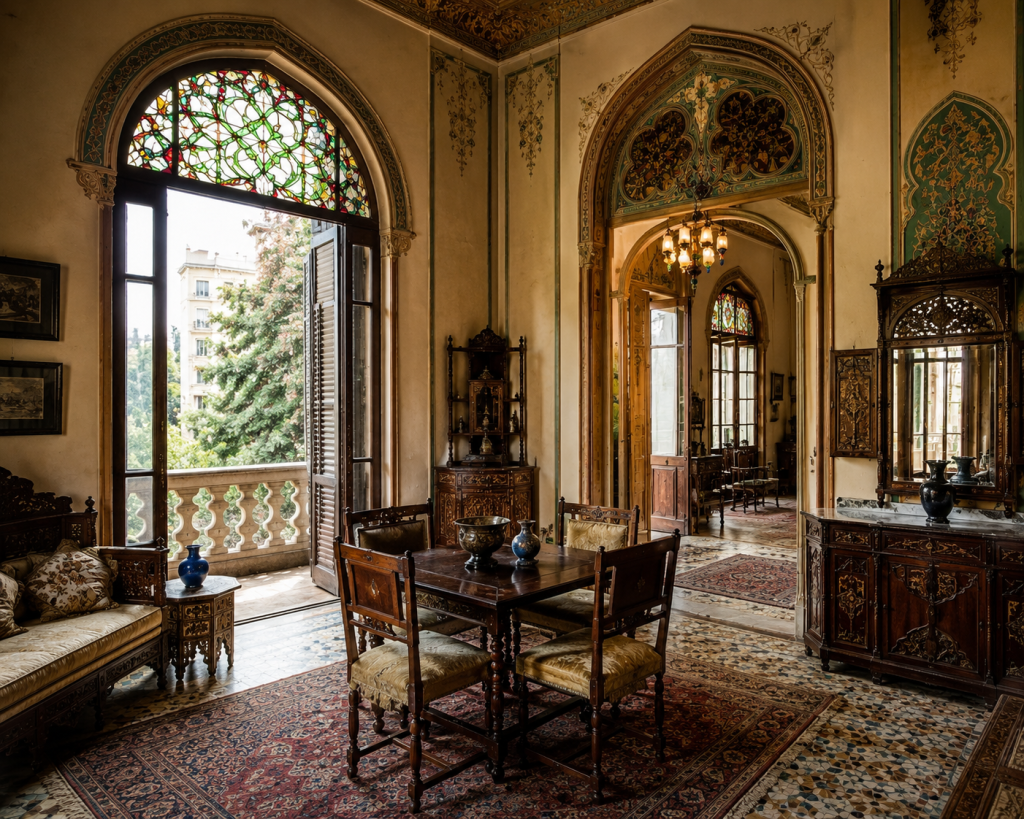
Korba, developed as part of Baron Empain’s Heliopolis vision, blended European Art Nouveau with Neo-Moorish and Egyptian influences. Decorative arches, patterned tiles, geometric motifs, and intricate woodwork defined many interiors.
Unlike Downtown’s formal grandeur, Korba’s interiors celebrated craftsmanship and cultural hybridity, creating a design language that remains relevant today.
Challenges Facing Historic Interiors Today
Many historic interiors have suffered from neglect, insensitive renovations, apartment subdivisions, and changing economic conditions.
Original materials are often concealed or removed, decorative elements lost, and modern commercial demands frequently compromise architectural integrity. At the same time, occupants require spaces that support contemporary lifestyles, technology, and energy efficiency.
The challenge is therefore not only preservation but thoughtful adaptation.
Connecting Heritage to the Future of Interior Design
Adaptive Reuse as a Design Strategy
Historic buildings can be transformed into boutique hotels, creative workspaces, galleries, cultural venues, and modern residences without losing their architectural character.
By integrating new functions around existing features, original moldings, flooring, and spatial qualities become valuable assets rather than obstacles.
Smart Technology within Historic Environments
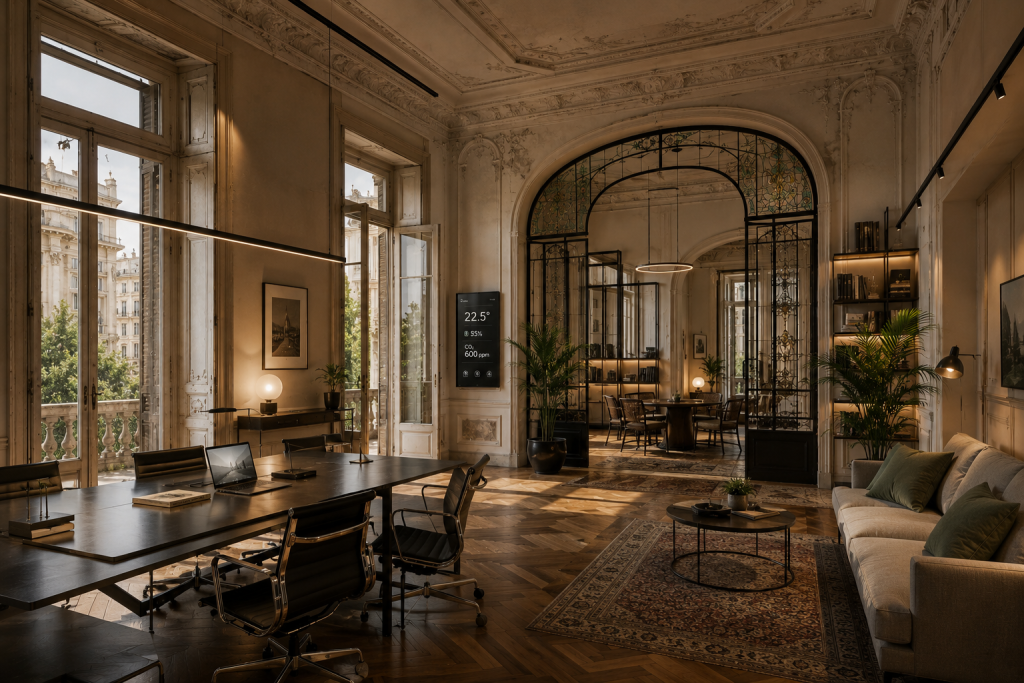
Modern technologies can be integrated discreetly into heritage interiors. Wireless lighting controls, concealed climate systems, smart glazing, and building management solutions improve comfort and efficiency while preserving historic character.
Technology should enhance the experience without dominating it.
Sustainable Preservation
Many vintage Cairo interiors already incorporate sustainable principles through natural ventilation, daylight optimization, and thermal mass.
Future interventions should build on these strengths through sensitive upgrades, improved insulation, and the use of local materials, allowing historic buildings to support contemporary environmental goals.
Hybrid Living and Working Spaces
As boundaries between living and working continue to blur, the generous layouts of historic apartments offer exceptional flexibility.
Reception rooms and large interiors can accommodate co-working spaces, creative studios, and cultural gatherings while maintaining their original identity and social function.
Digital Heritage and Immersive Experiences
Digital technologies provide new ways to document and interpret historic interiors. Three-dimensional scanning, virtual reality, augmented reality, and digital archives can preserve endangered spaces and create immersive educational experiences for future generations.
A New Design Language for Cairo
The revitalisation of Cairo’s vintage interiors should neither replicate the past nor erase it. Instead, it should create a design language where historic craftsmanship coexists with contemporary functionality.
Restored parquet floors can sit alongside smart environmental systems, while traditional details can frame flexible, technology-enabled spaces. Heritage remains relevant through continuous reinterpretation.