Workplace design in 2026 is no longer defined by the number of desks, but rather by how effectively they support productivity, collaboration, wellbeing, and business growth. It is about creating an environment that helps people do their best work, whether they are focusing alone, meeting with a team, or connecting informally throughout the day. Recent research from Gensler and JLL shows that employees want workplaces that support both individual and collective work, while organizations are prioritizing productivity, flexibility, and a better overall workplace experience.
As businesses across Egypt adapt to changing work patterns, technological advancements, and new employee expectations, workplace design has become a strategic investment rather than simply a real estate decision. For organizations in Cairo, New Cairo, Sheikh Zayed, and the New Administrative Capital, workplace design is playing a critical role in attracting talent, strengthening company culture, and enhancing operational performance.
1. Flexible Workspaces Are Replacing Traditional Office Layouts
One of the strongest trends is the move toward human-centered, activity-based planning. Instead of designing one type of workstation for everyone, companies are now creating a mix of quiet areas for concentration, open spaces for collaboration, enclosed meeting rooms, and informal zones for quick discussions. This approach reflects how work actually happens today and gives employees more choice over where and how they work. Gensler’s 2025 workplace research emphasizes that great design starts with people in mind and that workplaces should support both individual and team-based work.
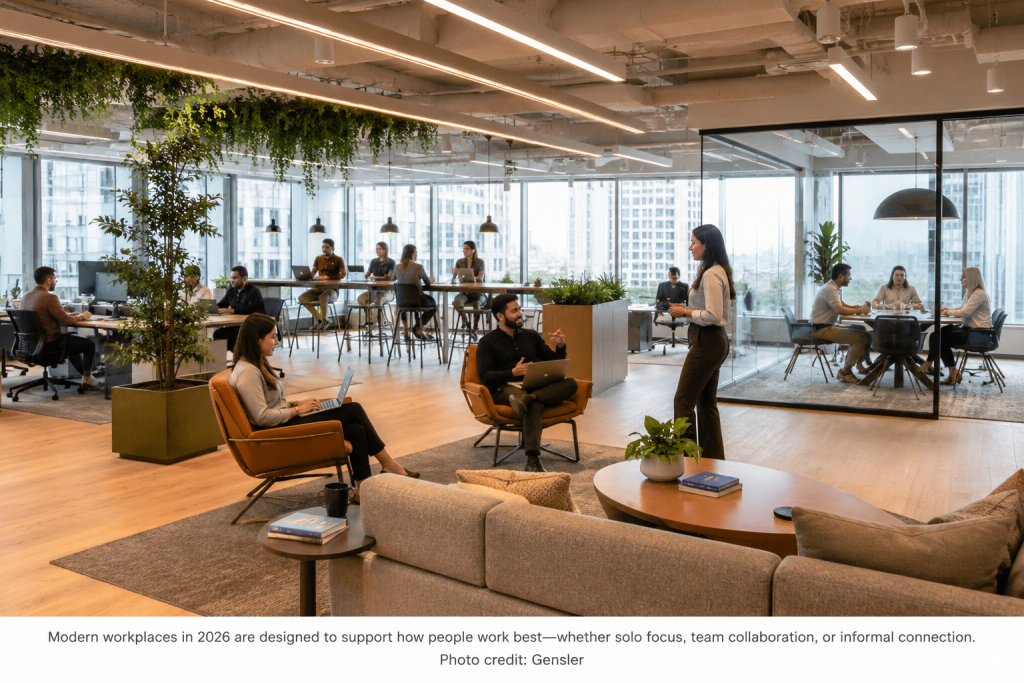
Today’s employees perform different tasks throughout the day, from focused individual work and virtual meetings to team collaboration and client presentations. Modern offices are incorporating collaborative work zones, quiet focus areas, informal meeting spaces, multi-purpose rooms, and flexible workstations.
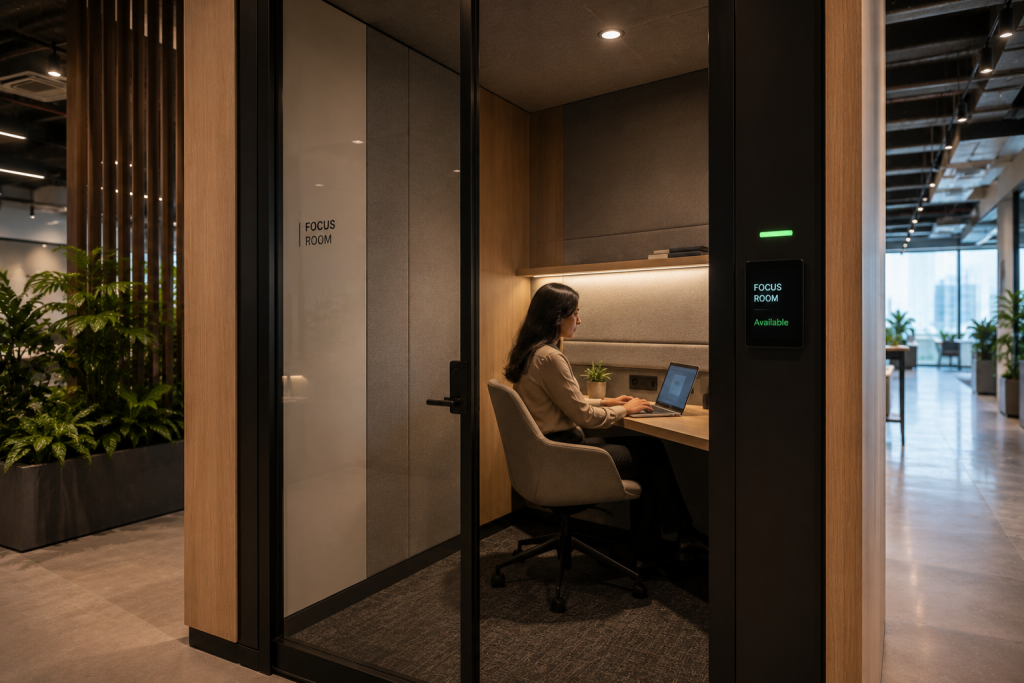
Another clear shift is toward more flexible and adaptable spaces. Businesses are changing faster than before, so workplaces need to be easy to reconfigure as teams grow, shrink, or change function. Modular furniture, movable partitions, and multi-purpose rooms make it easier to adjust the office without major disruption. JLL’s 2026 outlook also notes that flexible work patterns and new AI-driven ways of working are shaping workplace strategy, which means offices must be ready for constant change rather than fixed routines.
2. Employee Wellbeing Is Becoming a Design Priority
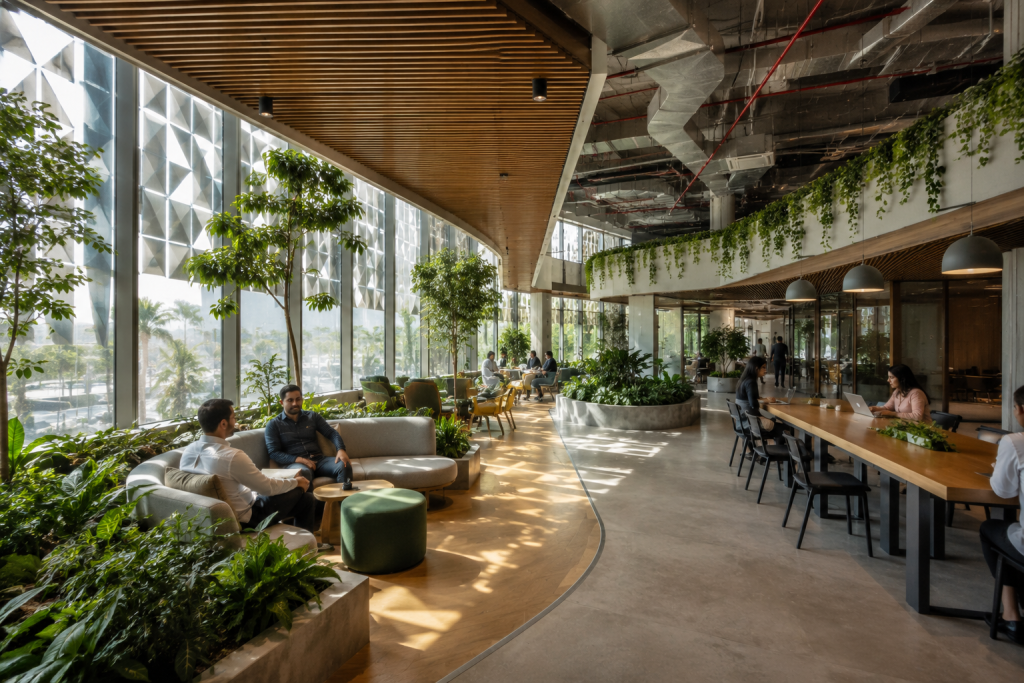
Modern workplace design focuses on creating environments that support both physical and mental wellbeing through increased natural daylight, improved indoor air quality, ergonomic furniture, acoustic comfort, access to breakout areas, and wellness-focused amenities.
Employees are also expecting workplaces to feel more welcoming and less rigid. Many modern offices are moving away from a purely corporate look and toward spaces that feel more creative, natural, and comfortable. That is why our design teams are paying more attention to daylight, visual warmth, informal social areas, and the overall experience of arriving at and moving through the office. Gensler’s research highlights this shift clearly, showing that workers increasingly prefer workplaces that feel more creative, natural with greenery or Bio-philic Interiors, and residential than traditional corporate environments.
For Egypt, and especially Cairo, design must also respond to climate and energy performance. Cairo is hot and very sunny, so shading, thermal comfort, efficient cooling, and controlled daylight are not just design details; they are essential parts of a successful workplace.
3. Smart Technology Is Shaping the Future Office
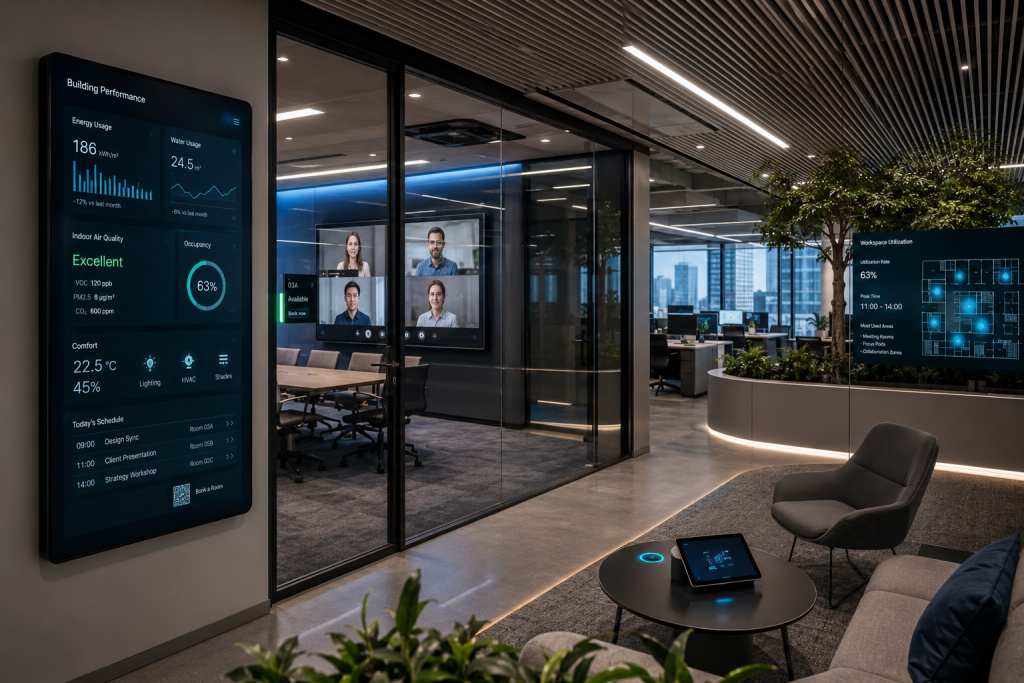
Key technology considerations include smart meeting rooms, occupancy monitoring systems, integrated audiovisual solutions, wireless collaboration tools, energy management systems, and touchless workplace technologies.
- Sustainability Is Driving Design DecisionsCommon sustainable design strategies include energy-efficient lighting systems, optimized HVAC solutions, smart building controls, sustainable material selection, water-saving fixtures, and improved thermal performance. Sustainable design is also becoming more important globally, with JLL pointing to the greener office as a continuing priority. In practice, this means choosing materials, systems, and layouts that improve comfort while reducing long-term operating demands.
Pull-Out Quote:
“The most sustainable workplace is one that balances environmental performance, operational efficiency, and employee comfort.”
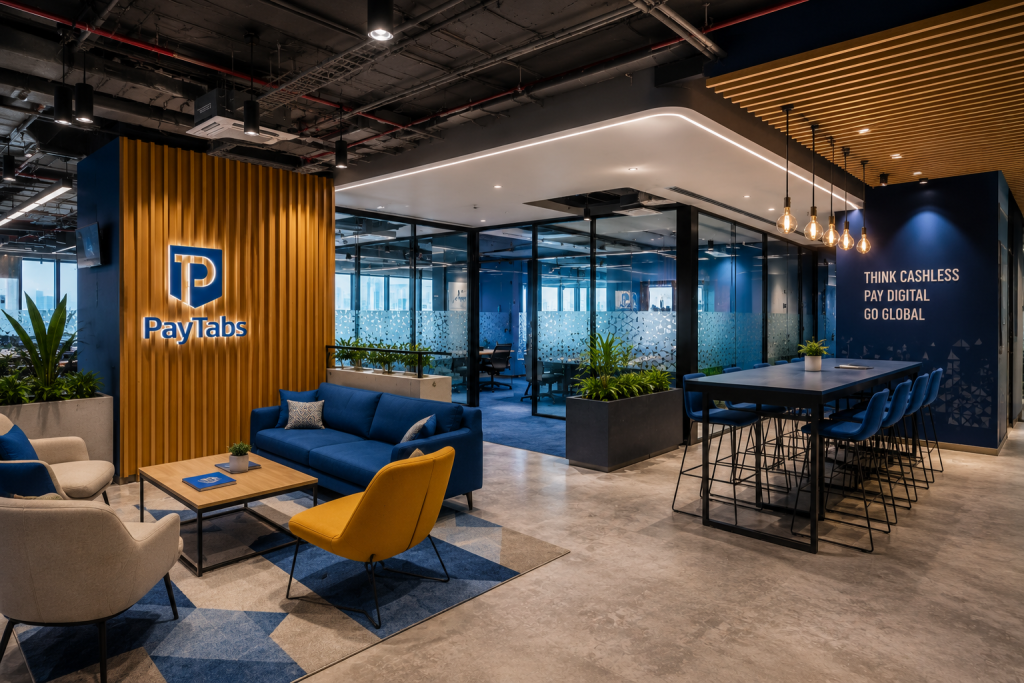
- Workplace Design Is Becoming an Extension of Brand IdentityOrganizations are increasingly using workplace design to communicate their values, culture, and identity through branded environments, customized collaboration spaces, strategic material selection, and memorable visitor experiences.
When designing workplaces, the most important question is not simply how the office will look, but how it will work. A well-designed workplace should reflect the company’s culture, support collaboration and focus, remain comfortable throughout the year, and adapt easily as business needs evolve. It should also help attract talent, improve productivity, and make the office a place people genuinely want to use. In 2026, the best workplaces will be the ones that combine flexibility, wellbeing, technology, and climate-smart design in one cohesive experience.