

Retail interiors are not simply about aesthetics. For successful retailers, interior design is a strategic business tool that influences customer behavior, increases sales, strengthens brand perception, and improves the overall shopping experience. Modern retail design is increasingly guided by research from environmental psychology, consumer behavior, neuroscience, and retail analytics.
This is why leading retailers such as Sephora, Zara, Nike, Apple, and IKEA use carefully planned circulation paths, feature displays, and cross-merchandising strategies to expose customers to products multiple times before they reach checkout. The goal is not to push purchases, but to create frequent, natural opportunities for product discovery.
1. Increasing Footfall and Store Attraction
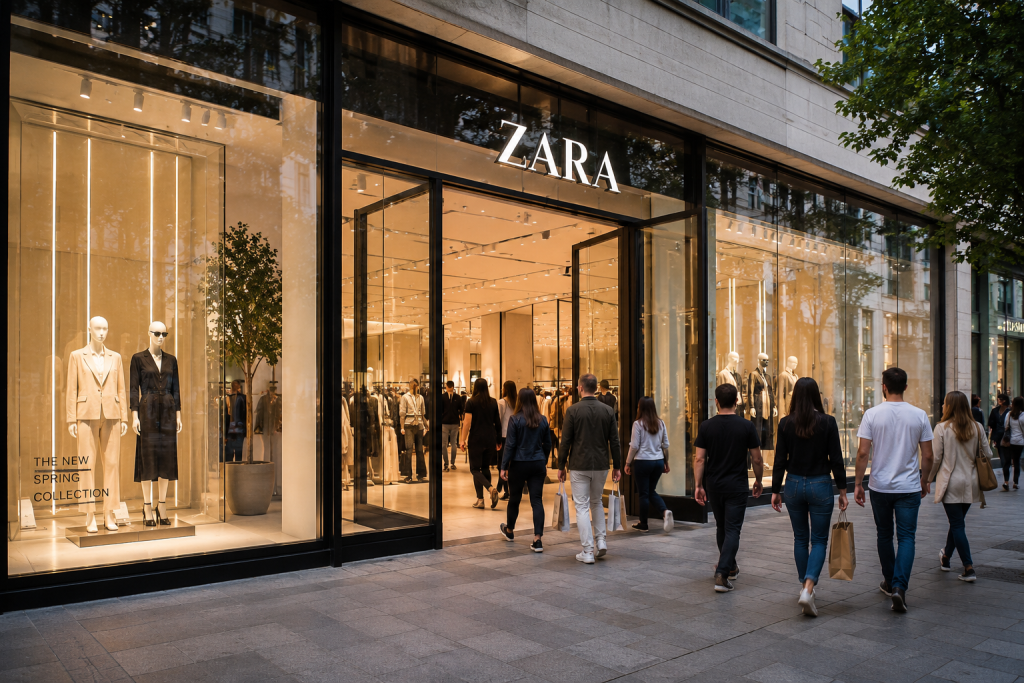
The first objective of any retail environment is to attract customers and encourage them to enter the store.
Research in environmental psychology shows that consumers form impressions of retail spaces within seconds of viewing them. Storefront visibility, lighting quality, transparency, and visual merchandising play critical roles in creating positive first impressions.
Retailers therefore seek interiors that:
- Create strong visual appeal from outside the store
- Communicate the brand identity immediately
- Use lighting to highlight products and draw attention
- Provide clear sightlines into the space
Studies have consistently found that attractive and well-maintained retail environments increase customer entry rates and improve perceptions of product quality before any interaction with merchandise occurs.
2. Maximizing Customer Engagement
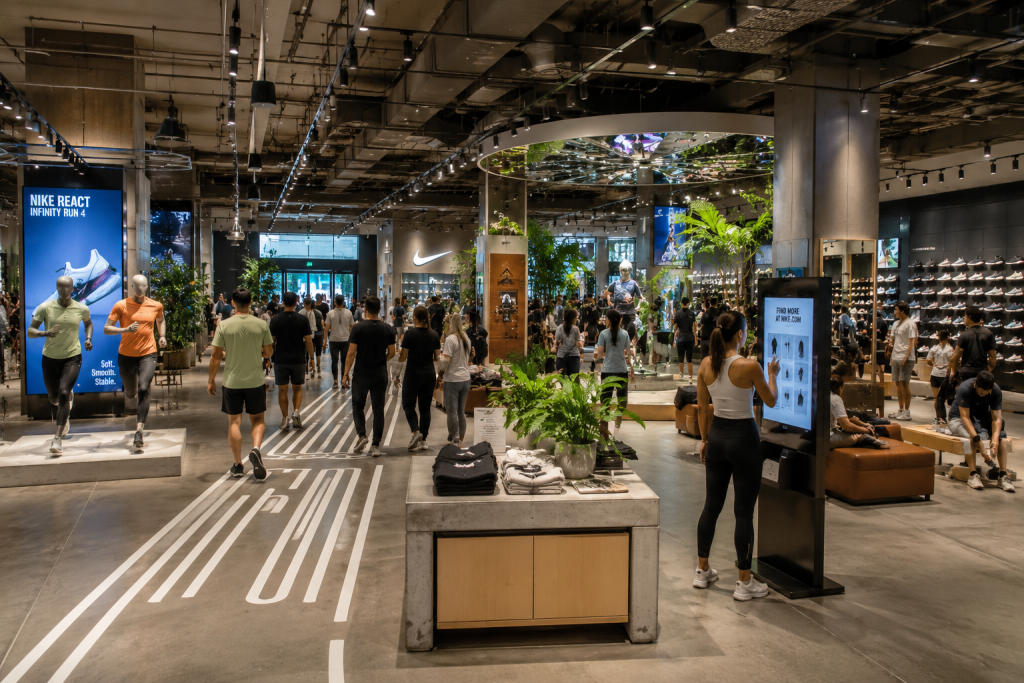
Once customers enter a store, retailers want them to remain inside for as long as possible.
Research demonstrates a direct relationship between dwell time and spending. The longer customers remain engaged within a retail environment, the greater the likelihood of purchase.
To increase engagement, retailers prioritize:
- Comfortable circulation paths
- Interactive product displays
- Experiential zones
- Visually stimulating focal points
- Spaces that encourage exploration
A well-designed store creates a journey rather than simply displaying products. Customers who discover products naturally through movement and exploration tend to spend more than those who follow a direct purchase path.
3. Creating Psychological Incentives to Purchase
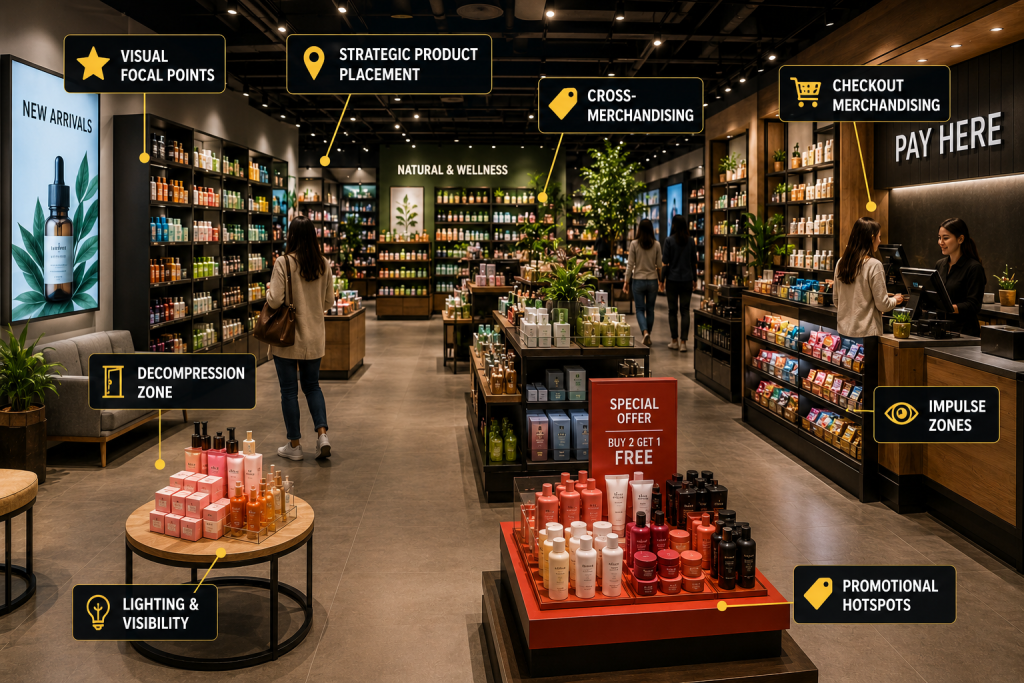
Consumer decisions are heavily influenced by environmental cues, many of which operate subconsciously.
Retailers use interior design to trigger positive emotional responses that increase purchase intent. Research in consumer psychology shows that emotions often influence purchasing decisions before rational evaluation takes place.
Key psychological tools include:
Lighting
Warm and focused lighting increases perceptions of comfort, luxury, and product quality.
Studies have found that products displayed under optimized lighting are perceived as more desirable and valuable.
Color
Different colors trigger different emotional responses.
- Warm colors can stimulate excitement and urgency.
- Cool colors can communicate trust and relaxation.
- Neutral palettes often support premium brand positioning.
Retailers select color schemes based on the emotional response they wish to create.
Spatial Design
Customers associate spacious environments with premium products and higher quality.
Luxury retailers often use generous spacing around merchandise because consumers subconsciously interpret space as exclusivity and value.
Sensory Stimulation
Research on sensory marketing demonstrates that ambient scent, music, temperature, and material textures significantly affect purchasing behavior.
Pleasant sensory environments increase customer satisfaction, lengthen dwell time, and can raise overall spending.
4. Making Products More Appealing
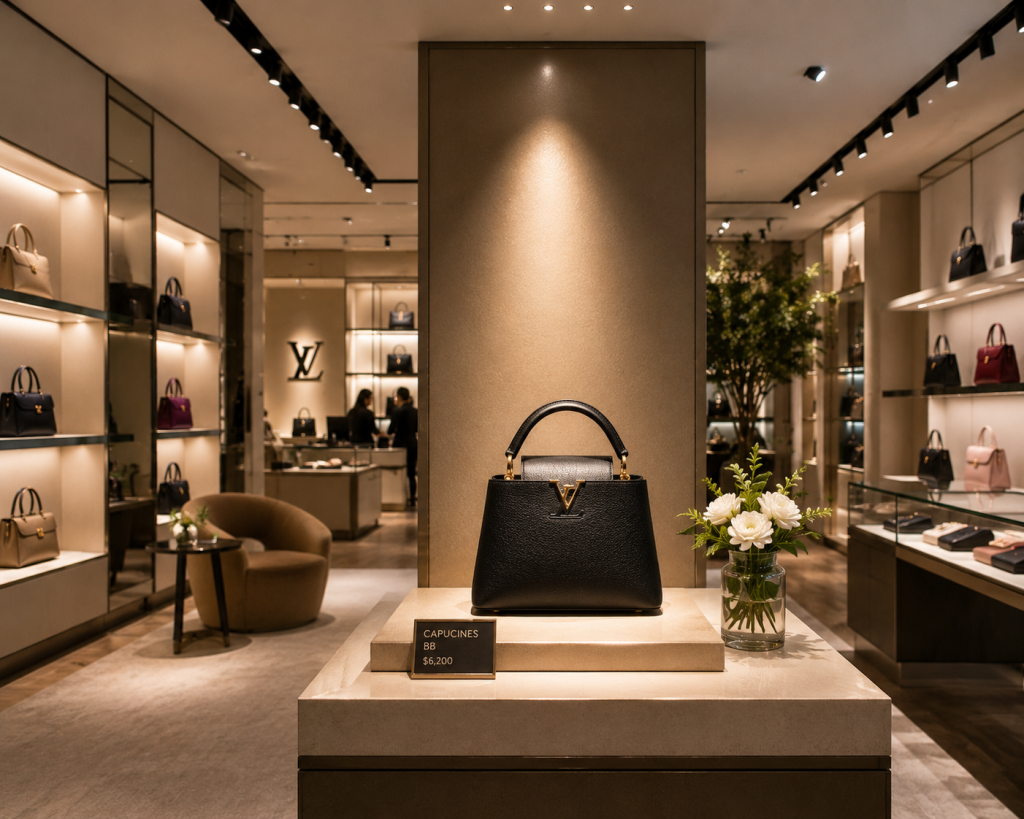
One of the primary purposes of retail interiors is to elevate product presentation.
Studies show that consumers often evaluate products relative to their surroundings. The same product can be perceived as more valuable when displayed within a carefully designed environment.
Retailers therefore seek interiors that:
- Frame products as focal points
- Minimize visual clutter
- Provide optimal lighting conditions
- Create strong contrast between products and background surfaces
- Enable customers to interact with merchandise comfortably
This phenomenon is often referred to as the “context effect,” where environmental conditions influence perceptions of quality and desirability.
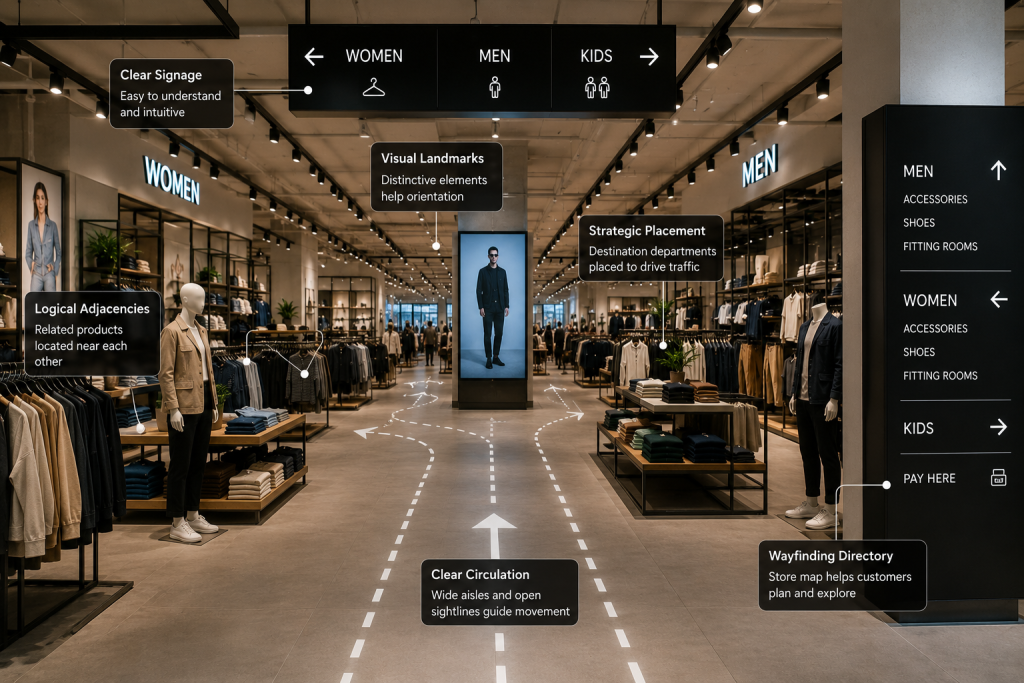
5. Improving Customer Navigation
Poor navigation creates frustration and reduces purchasing opportunities.
Research in retail wayfinding shows that customers prefer environments that are easy to understand while still encouraging discovery.
Effective retail interiors incorporate:
- Clear circulation routes
- Logical product adjacencies
- Strategic placement of destination products
- Visual landmarks
- Intuitive signage systems
The objective is to reduce cognitive effort while maximizing product exposure.
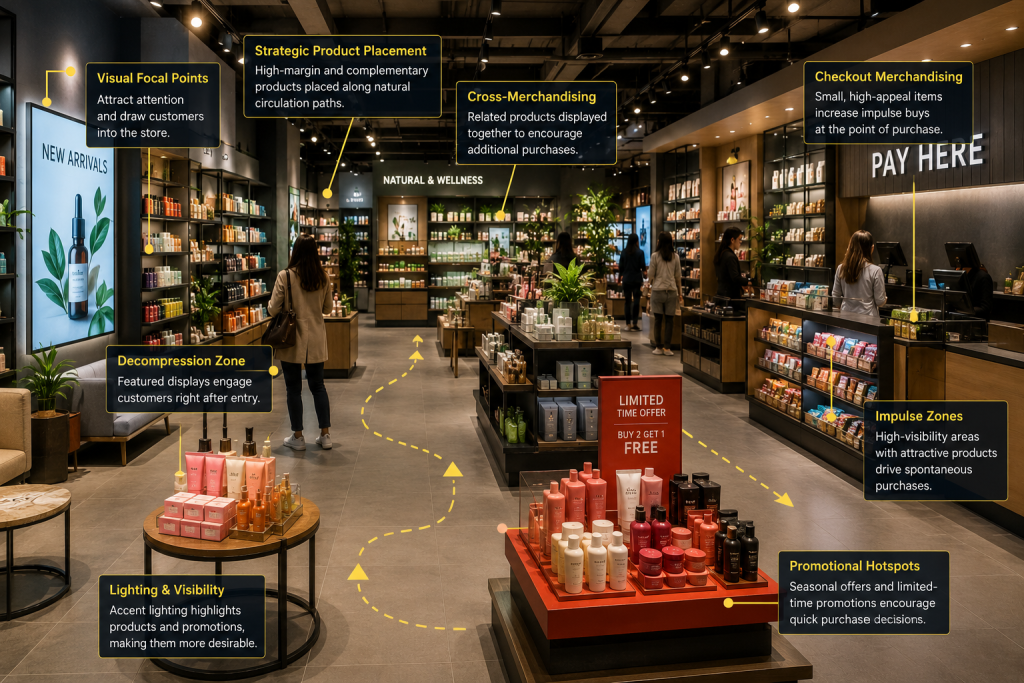
6. Encouraging Impulse Purchases
A significant percentage of retail purchases are unplanned.
Designers therefore Retail interiors to increase opportunities for impulse buying through:
- Strategic product placement
- High-visibility promotional zones – Products at effortless eye level
- Checkout merchandising along walk paths
- Cross-category product displays – Queue-side displays
- Open entry space as transition areas sparing time for Customers to make decisions
- Seasonal product presentations and featured promotional displays
- Complementary products grouped together and lifestyle displays
- “New Arrivals” zones
- Limited-edition product displays
Lighting Hierarchy
Lighting can subconsciously direct attention toward impulse merchandise.
Design Elements:
- Accent lighting on promotional products
- Spotlighting new arrivals
- Brighter feature displays than surrounding areas
- Warm lighting around high-margin products
Behavioral research demonstrates that customers are more likely to make spontaneous purchases when products are encountered naturally throughout the shopping journey.
7. Building Brand Identity and Emotional Connection
Today’s consumers increasingly seek experiences rather than transactions.
Retailers use interior design to communicate brand values and create emotional engagement. Every material, finish, lighting fixture, display, and spatial arrangement contributes to a brand narrative.
Research shows that stores with strong experiential identities generate:
- Higher customer loyalty
- Increased repeat visitation
- Stronger emotional attachment
- Greater willingness to pay premium prices
For this reason, leading retailers view store interiors as extensions of their brand strategy rather than simply physical sales environments.
8. Supporting Omnichannel Retail
Modern consumers often move between digital and physical channels.
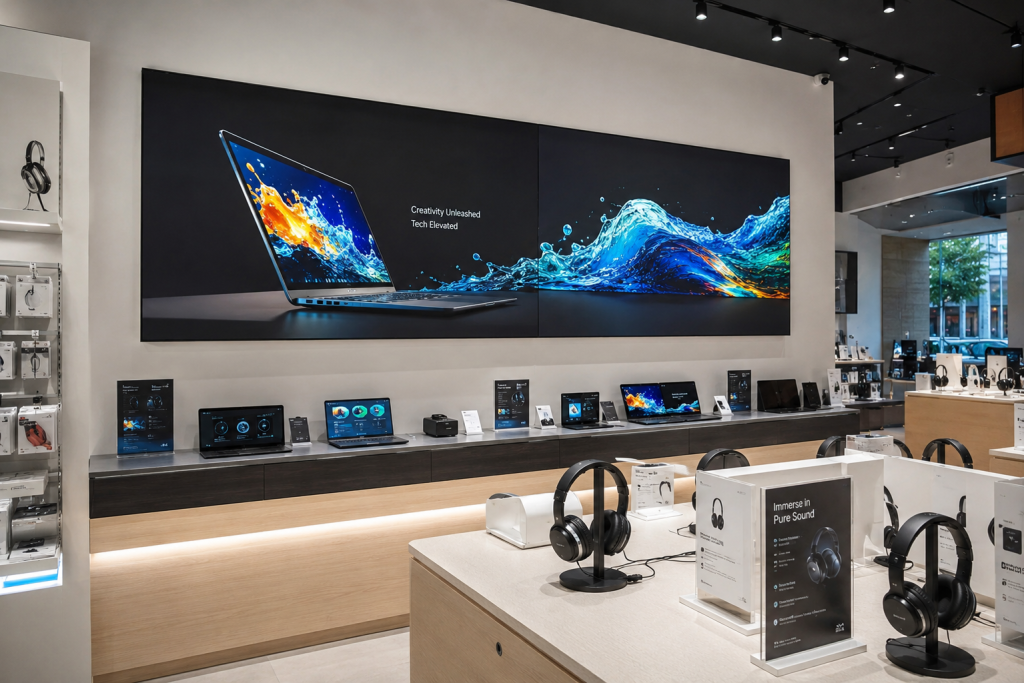
Retailers increasingly seek interiors that support:
- Click-and-collect services
- Product demonstration areas
- Mobile-assisted shopping
- Self-service technologies
- Flexible merchandising layouts
The physical store is becoming both a sales platform and an experiential touchpoint within a broader customer journey.
From a business perspective, successful retail interiors are designed to achieve measurable commercial outcomes. Retailers seek environments that attract customers, increase dwell time, enhance product appeal, encourage impulse purchases, strengthen brand identity, and ultimately drive higher sales.
Scientific research consistently demonstrates that store interiors influence customer perception, emotional response, decision-making, and spending behavior. As a result, retail interior design has evolved from a purely aesthetic discipline into a strategic tool grounded in psychology, consumer behavior, and evidence-based design principles. The most successful retail environments are those that seamlessly combine functionality, emotional engagement, and commercial performance to create experiences that customers enjoy and businesses profit from.