

Where Contemporary Luxury Meets Coastal Living
The Mediterranean and Red Sea coastlines have long inspired some of the world’s most desirable vacation homes. From the influences of whitewashed villages of the Greek Islands and the sophisticated villas of the Italian Riviera to the contemporary beachfront residences of Egypt’s North Coast, El Gouna, Sahl Hasheesh, and Ras Soma, coastal interiors are evolving toward a refined balance between luxury, comfort, and a deep connection to nature.
Today, this design evolution extends across the wider region, influencing the next generation of luxury coastal destinations along Saudi Arabia’s Red Sea coast, including AMAALA, Umluj, and Al Wajh. These developments are redefining waterfront living through architecture and interiors that celebrate their extraordinary natural settings while delivering world-class hospitality and residential experiences.
Modern coastal vacation homes are moving beyond traditional nautical themes and embracing a more sophisticated design language—one that celebrates local materials, natural light, sustainability, and effortless indoor-outdoor living. The result is a contemporary coastal aesthetic that feels timeless, elegant, and perfectly adapted to Mediterranean and Red Sea environments.
1. Nature-Inspired Color Palettes
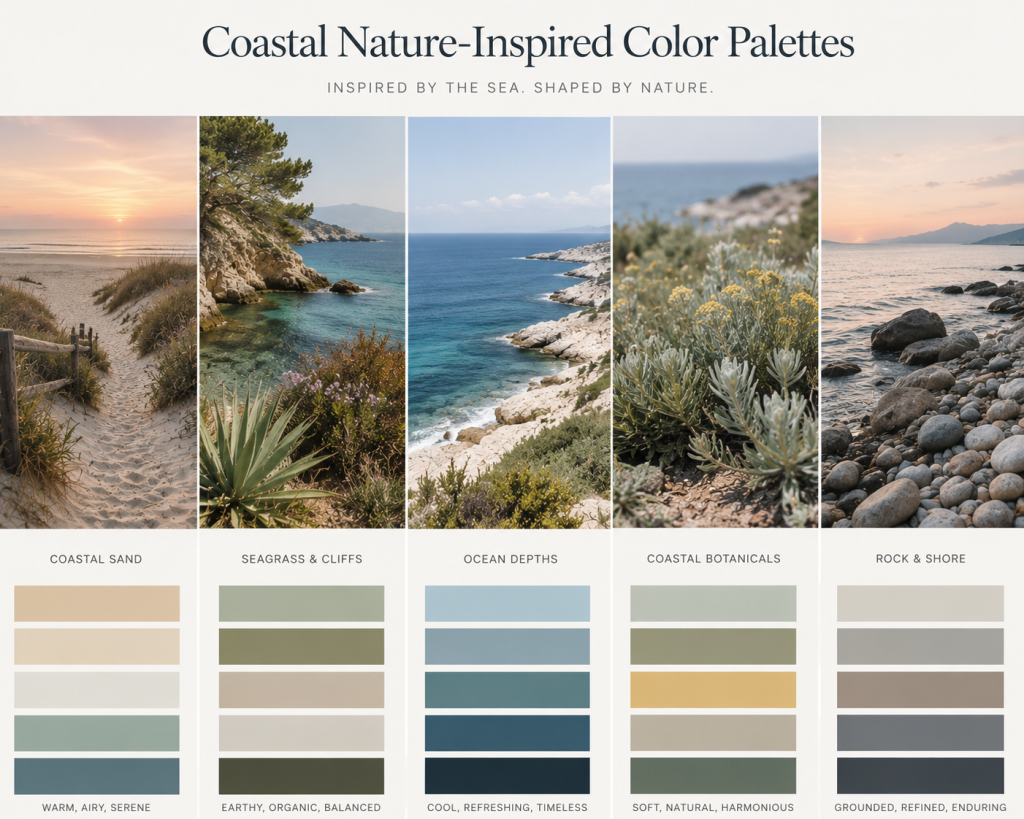
Modern coastal interiors are increasingly defined by subtle, nature-derived color schemes rather than overt marine motifs.
Designers draw inspiration directly from the surrounding landscape:
- Warm sand and limestone tones
- Soft ivory and off-white finishes
- Muted terracotta and clay accents
- Seafoam greens and sage hues
- Deep Mediterranean blues
- Sun-bleached wood colors
- Natural stone grays
Along Egypt’s North Coast, the palette often reflects the contrast between golden dunes, limestone cliffs, and the turquoise waters of the Mediterranean. In destinations such as El Gouna, Sahl Hasheesh, Ras Soma, and Saudi Arabia’s Red Sea destinations of Umluj and Al Wajh, where sunlight is more intense and the landscapes are more arid, interiors frequently incorporate warmer desert-inspired shades paired with cool blue accents that mirror the sea and sky.
The objective is to create calm, restorative environments that echo the colors found just outside the windows.
2. Seamless Indoor-Outdoor Living
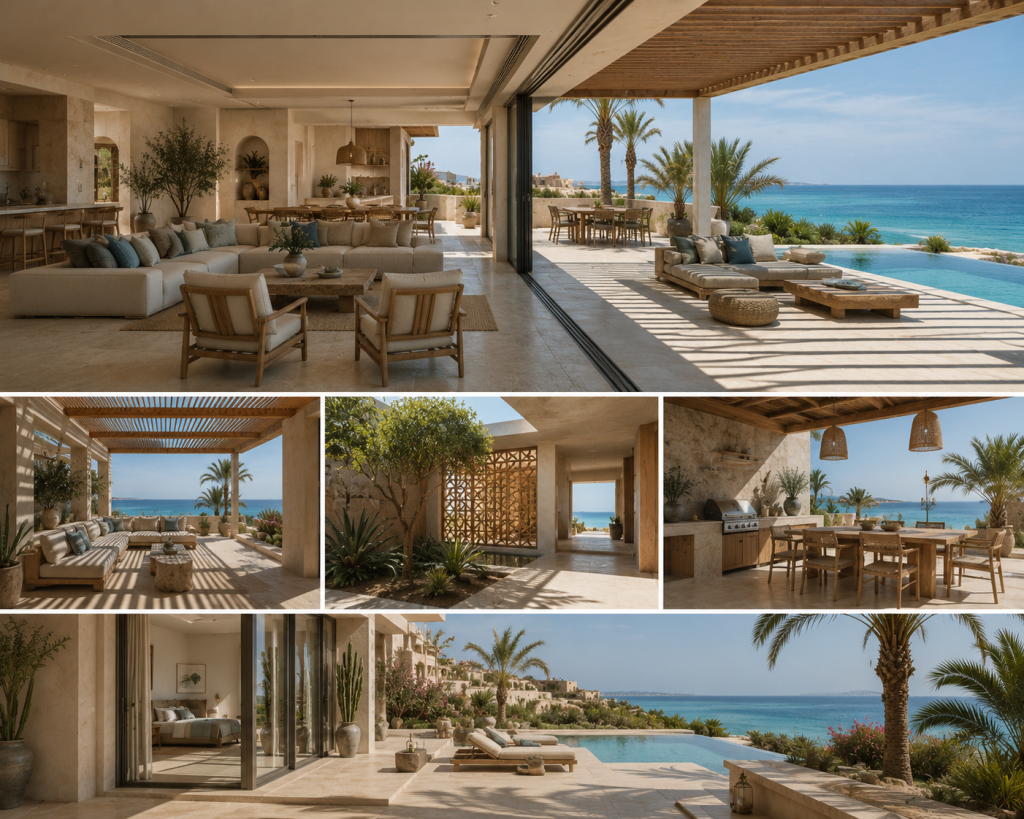
One of the strongest trends shaping coastal vacation homes is the dissolution of boundaries between interior and exterior spaces.
Large sliding glass doors, pocket doors, and floor-to-ceiling glazing maximize views while allowing living spaces to extend naturally onto terraces, patios, and pool decks.
Key features include:
- Continuous flooring materials from inside to outside
- Outdoor living rooms with integrated shading
- Covered terraces and pergolas
- Outdoor kitchens and dining areas
- Lounge spaces oriented toward sea views
This approach is particularly evident in contemporary villas where expansive sea-facing terraces are becoming defining architectural features. In Red Sea destinations designers often incorporate deep overhangs, mashrabiya-inspired screens, shaded courtyards, and landscaped outdoor rooms that provide protection from the sun while maintaining visual openness toward the water.
3. Organic Materials and Authentic Textures
Modern coastal luxury is increasingly defined by authenticity rather than extravagance.
Natural materials create warmth, depth, and a sense of permanence:
Stone
- Travertine
- Limestone
- Local sandstone
- Honed marble
Wood
- Oak
- Ash
- Teak
- Weathered timber finishes
Textiles
- Linen
- Cotton
- Wool blends
- Natural woven fibers
Decorative Elements
- Rattan
- Cane
- Handmade ceramics
- Artisan-crafted accessories
In projects throughout Red Sea destinations designers frequently utilize local stone and handcrafted finishes that embraces natural materials that reinforce a sense of place while supporting sustainable design objectives.
Rather than polished perfection, contemporary coastal interiors celebrate authentic texture, craftsmanship, and natural aging.
4. Mediterranean Minimalism
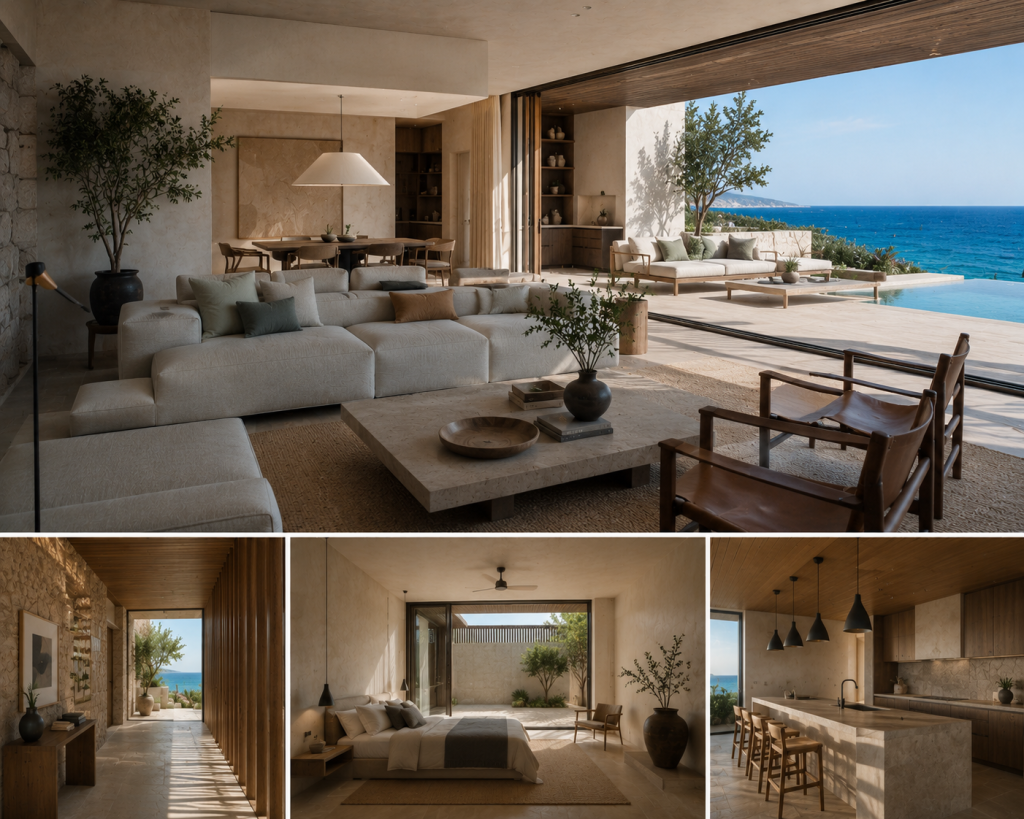
A growing influence across luxury coastal developments is Mediterranean Minimalism—a design philosophy that combines simplicity with warmth.
Unlike stark modernism, Mediterranean Minimalism emphasizes:
- Soft architectural lines
- Curved forms and arches
- Textural surfaces
- Limited yet meaningful decoration
- Natural materials
- Comfortable furnishings
Spaces feel uncluttered but never cold, creating environments that encourage relaxation and connection.
This approach is particularly well suited to vacation homes, where the focus is on leisure, wellness, and escaping urban complexity.
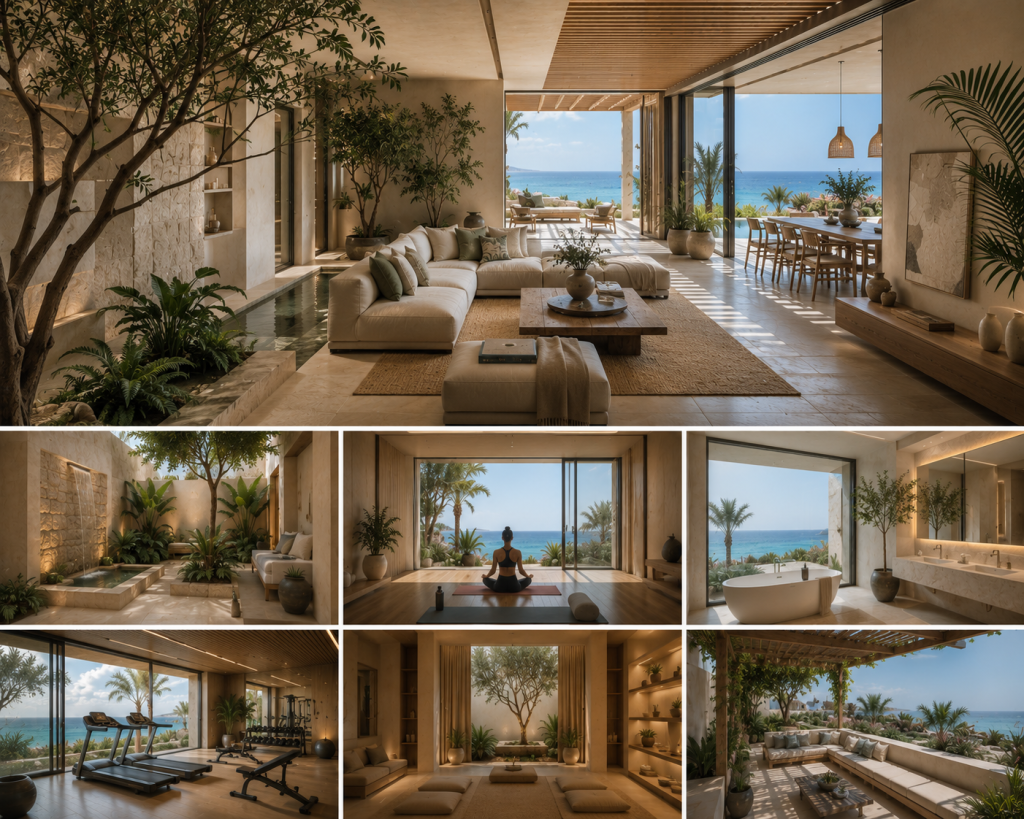
5. Biophilic Design and Wellness-Oriented Spaces
Modern homeowners increasingly seek interiors that support well-being and reconnect occupants with nature.
Biophilic design principles are becoming central to coastal architecture and interiors through:
- Maximized natural daylight
- Cross ventilation
- Interior courtyards
- Indoor planting
- Natural materials
- Water features
- Framed landscape views
Many luxury residences in the Red Sea area now incorporate wellness-focused spaces such as yoga terraces, meditation rooms, spa bathrooms, and private fitness areas designed around natural light and panoramic sea views.
Likewise, wellness forms a core pillar of Saudi Arabia’s AMAALA development, where hospitality and residential concepts place health, relaxation, and connection to nature at the center of the guest and homeowner experience.
6. Contemporary Interpretation of Regional Heritage
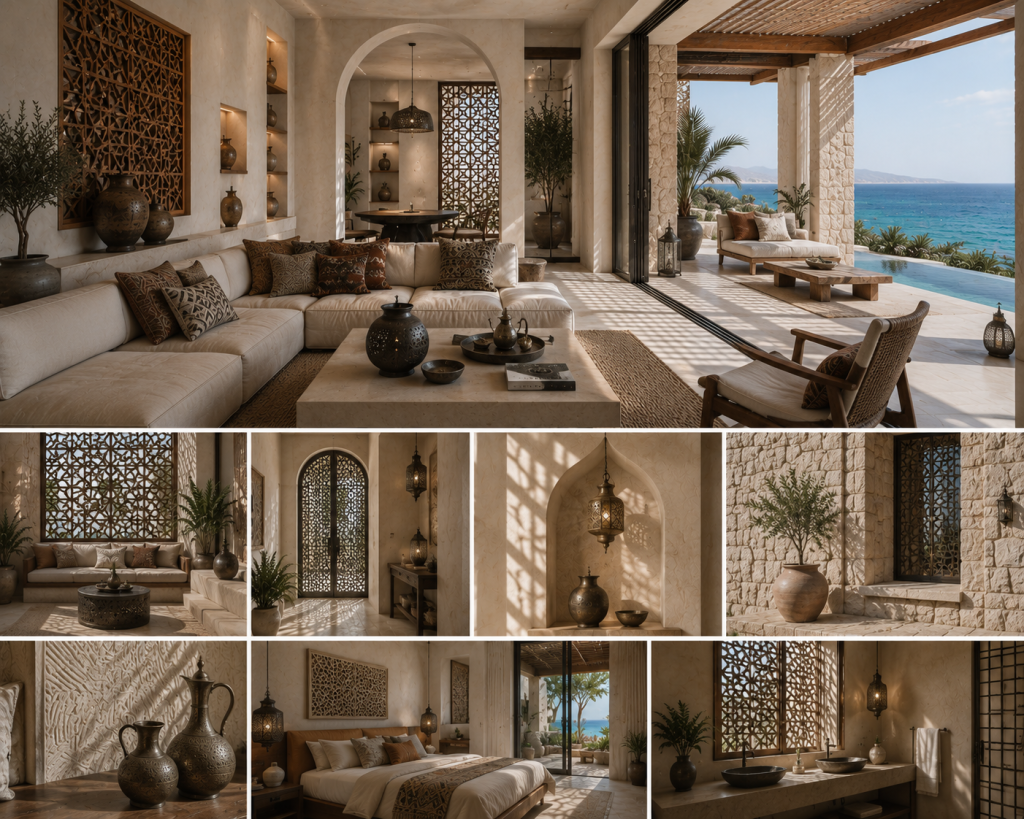
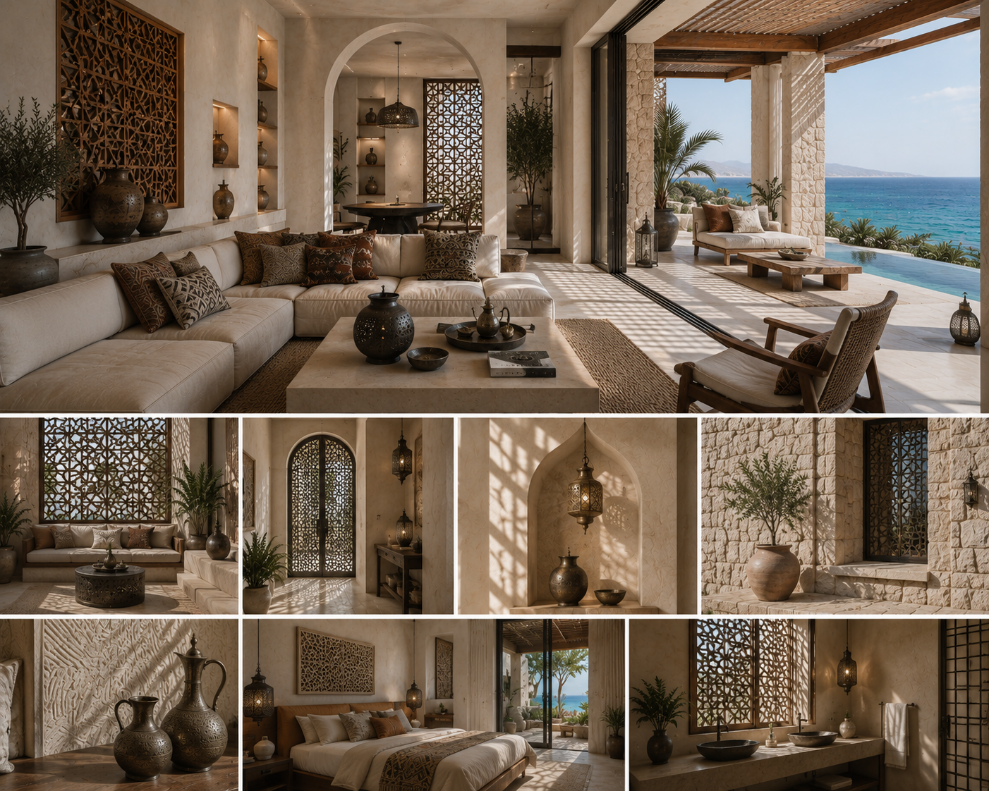
One of the most exciting trends in coastal design is the integration of local cultural influences into modern interiors.
Rather than reproducing traditional styles, designers reinterpret regional heritage through contemporary forms.
Mediterranean Inspirations
- Limewashed walls
- Stone arches
- Rustic timber beams
- Handmade ceramics
- Artisan textiles
Red Sea and Middle Eastern Inspirations
- Geometric patterns
- Mashrabiya-inspired screens
- Handcrafted metalwork
- Textured plaster finishes
- Local stone detailing
In El Gouna and many Red Sea resort communities, contemporary interpretations of traditional regional architecture create interiors that feel authentic and culturally grounded. This fusion creates interiors with a strong sense of place while maintaining a contemporary global appeal.
7. Statement Kitchens as Social Hubs
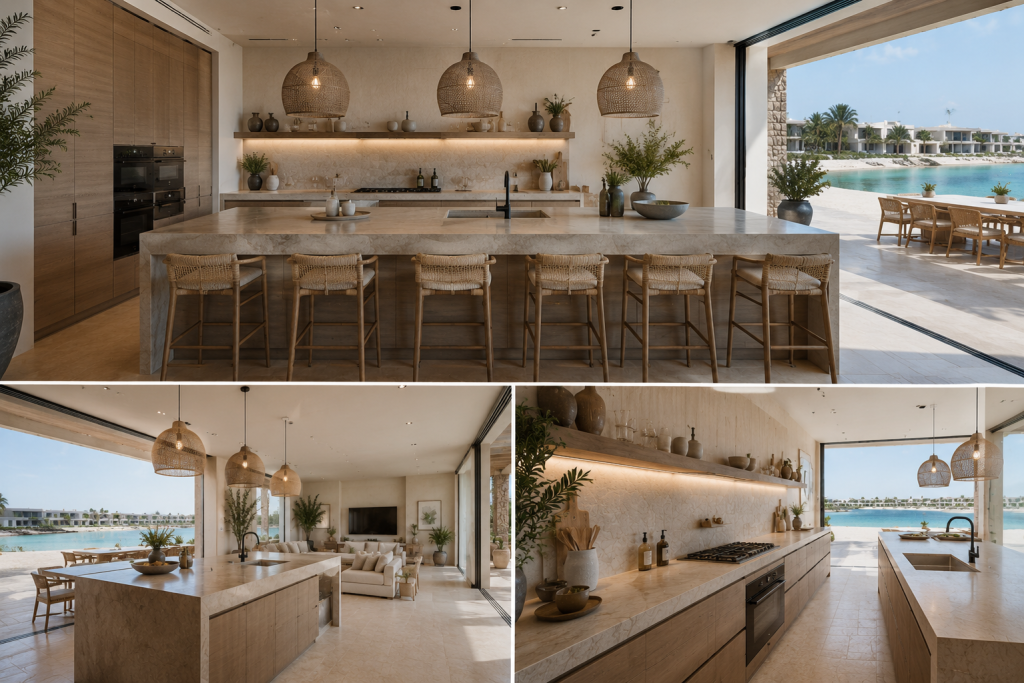
The kitchen has evolved into the heart of the vacation home.
Modern coastal kitchens emphasize:
- Large islands for gathering
- Natural stone countertops
- Integrated appliances
- Open shelving
- Organic textures
- Indoor-outdoor connectivity
Materials such as travertine, Taj Mahal quartzite, limestone, and light oak cabinetry are particularly popular selections. The aesthetic remains refined yet relaxed, supporting both casual family living and entertaining.
8. Spa-Inspired Bathrooms
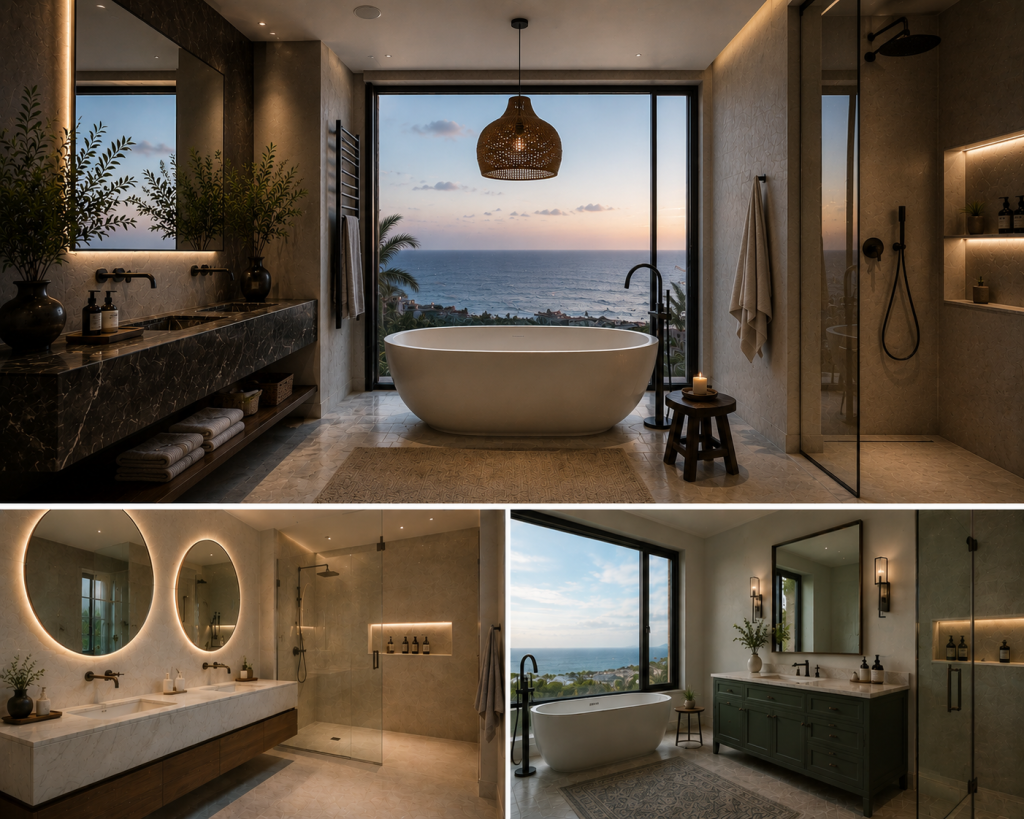
Bathrooms are increasingly designed as private wellness retreats.
Popular features include:
- Freestanding sculptural bathtubs
- Walk-in rainfall showers
- Natural stone surfaces
- Large-format porcelain slabs
- Floating vanities
- Warm ambient lighting
The experience aims to evoke the atmosphere of a boutique spa rather than a conventional residential bathroom.
9. Sustainable Coastal Luxury
Sustainability is becoming a defining aspect of high-end coastal design.
Leading developments now prioritize:
- Energy-efficient glazing
- Passive cooling strategies
- Locally sourced materials
- Water conservation systems
- Durable natural finishes
- Smart home energy management
For Red Sea projects, passive design solutions are particularly important due to the region’s climate, helping reduce energy consumption while enhancing comfort.
True luxury increasingly means creating homes that are both environmentally responsible and deeply connected to their surroundings.
10. Curated Simplicity and Personalization
The era of heavily themed coastal interiors is fading.
Today’s most successful vacation homes embrace curated simplicity, where every element serves a purpose and contributes to an overall atmosphere of calm sophistication.
Designers are focusing on:
- Bespoke furniture
- Local artwork
- Handmade accessories
- Carefully selected materials
- Personalized styling