

Beyond Treatment: Designing Places That Heal
In today’s competitive healthcare and wellness landscape, clinical excellence alone is no longer enough. Patients and guests increasingly choose facilities based not only on outcomes, but also on how a place makes them feel.
Scientific research has consistently demonstrated that the physical environment influences stress levels, trust formation, treatment adherence, perceived quality of care, and even recovery outcomes. The most successful private clinics and wellness spas understand that they are not merely providing services—they are creating emotional experiences.
The future belongs to facilities that function as healing sanctuaries: environments where guests instinctively feel calm, safe, welcomed, and cared for from the moment they arrive.
The Neuroscience of Safety and Trust
Human beings are biologically programmed to continuously scan their environment for signs of danger or safety—a concept known in neuroscience as neuroception, introduced by Dr. Stephen Porges through the Polyvagal Theory.
Before a patient consciously evaluates a clinic, their nervous system has already formed an impression based on environmental cues such as:
- Lighting
- Noise levels
- Spatial organization
- Facial expressions of staff
- Colors and materials
- Air quality
- Cleanliness
When an environment signals safety, the parasympathetic nervous system becomes more active, reducing cortisol production and stress responses.
Research published in healthcare design and environmental psychology journals has shown that lower stress levels improve patient satisfaction, increase trust in providers, and contribute to greater willingness to return for future treatments.
First Impressions Shape Long-Term Loyalty
Studies suggest that people often form impressions of a space within seconds of entering.
A cold reception desk, harsh lighting, crowded waiting areas, or excessive noise can trigger subtle stress responses that undermine confidence before any consultation begins.
Conversely, environments that communicate order, warmth, and professionalism create what psychologists call a “halo effect,” where positive perceptions of the environment extend to perceptions of service quality.
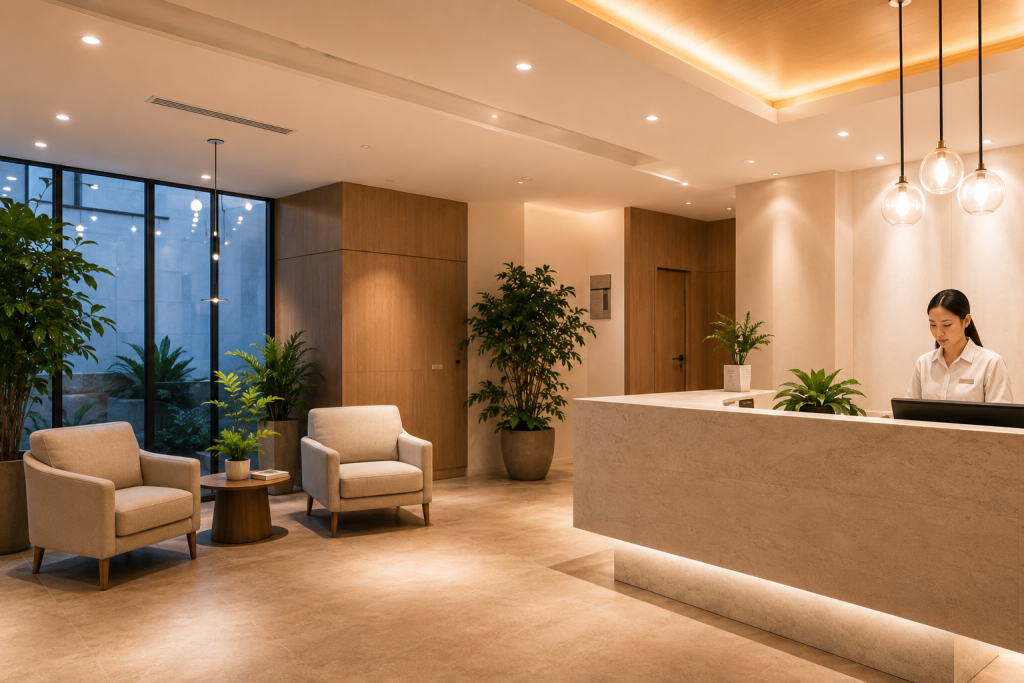
The arrival sequence should therefore be designed intentionally:
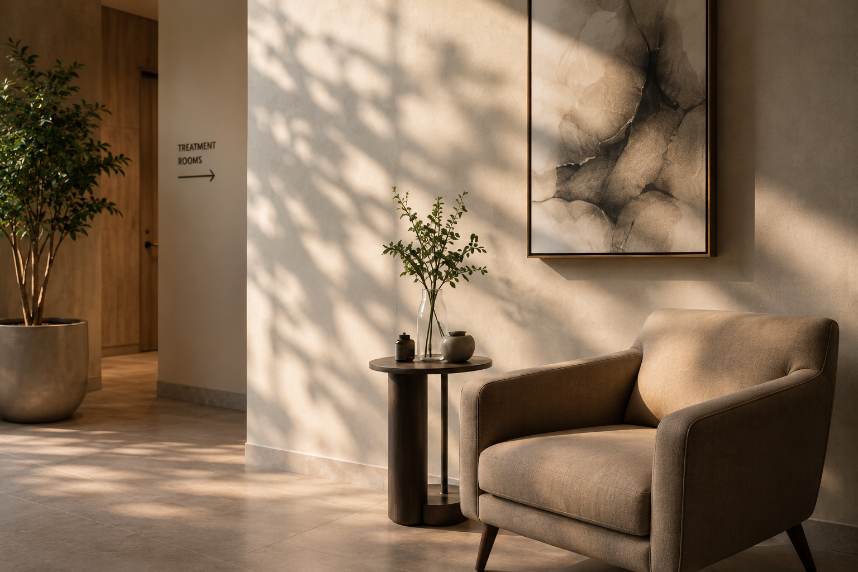
- Easy and intuitive wayfinding
- Warm greetings
- Comfortable waiting areas
- Pleasant scents
- Soft background music
- Visual openness and natural light
Every element should communicate one message:
“You are safe here.”
The Healing Power of Nature
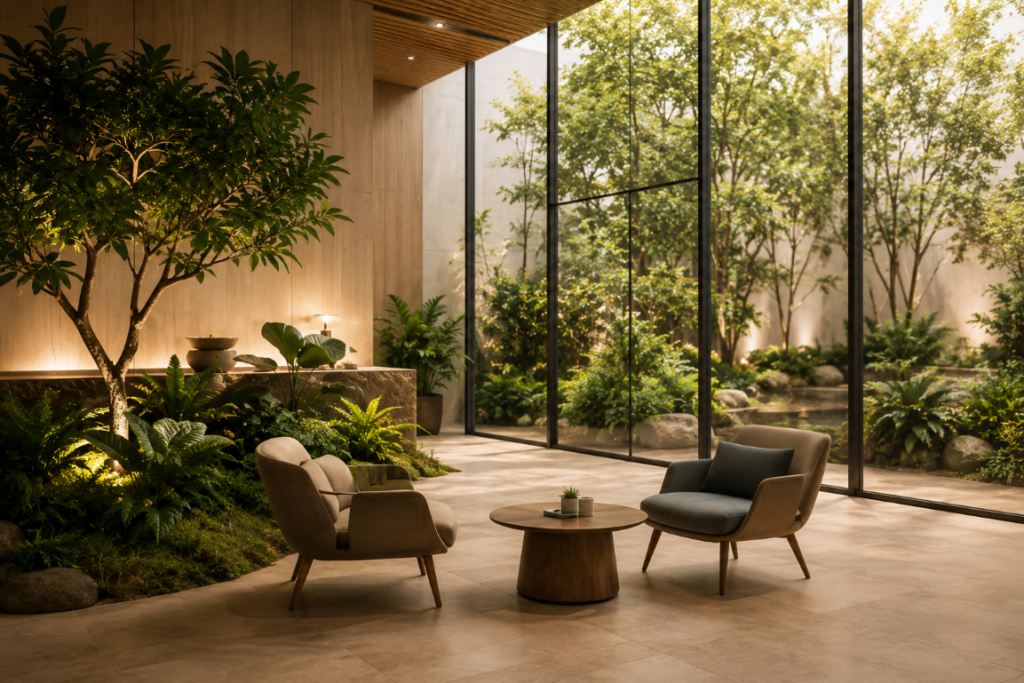
One of the most well-documented findings in healthcare design comes from biophilic design research.
In a landmark study by Roger Ulrich, hospital patients with views of nature recovered faster, required fewer pain medications, and reported greater satisfaction than those facing brick walls.
Subsequent research has found that exposure to natural elements can:
- Lower blood pressure
- Reduce cortisol levels
- Improve mood
- Enhance cognitive function
- Accelerate recovery
Private clinics and wellness spas can leverage this by incorporating:
- Indoor plants
- Water features
- Natural materials such as wood and stone
- Garden views
- Nature-inspired artwork
- Daylight optimization
Even indirect exposure to natural imagery has been shown to create calming psychological effects.
Lighting: The Invisible Therapeutic Tool
Light profoundly influences human biology.
Research on circadian rhythms demonstrates that exposure to natural daylight regulates sleep, mood, hormone production, and overall wellbeing.
Harsh fluorescent lighting, common in traditional healthcare settings, can increase discomfort and anxiety.
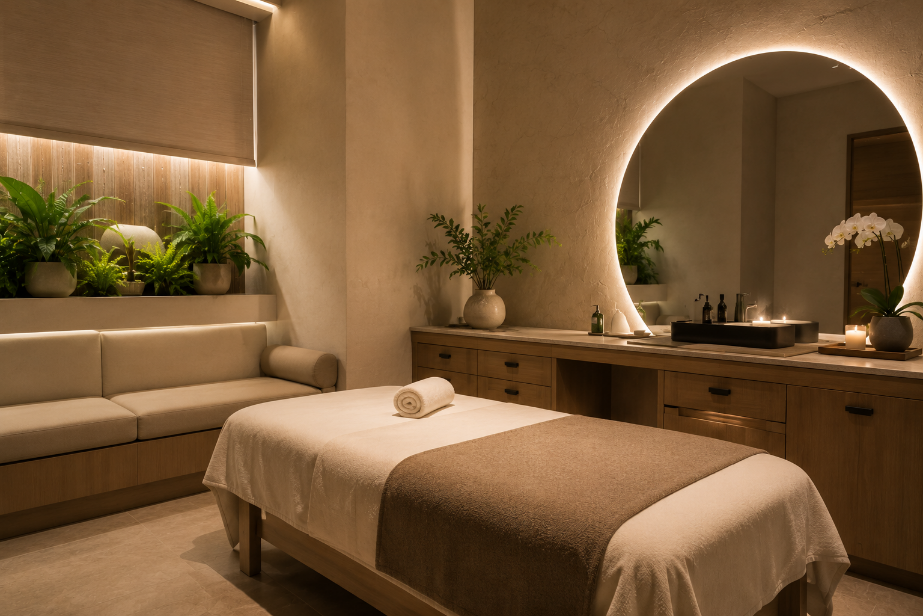
Healing environments instead prioritize:
- Abundant natural daylight
- Warm color temperatures
- Layered ambient lighting
- Adjustable task lighting
- Reduced glare
Patients often associate well-designed lighting with higher quality care, even when clinical outcomes remain identical.
Acoustics and Emotional Comfort
Noise is one of the most underestimated sources of stress in healthcare environments.
Studies have linked excessive noise to:
- Elevated blood pressure
- Increased anxiety
- Sleep disruption
- Lower patient satisfaction
Many clinics unintentionally create stressful soundscapes through:
- Loud reception areas
- Echoing corridors
- Ringing phones
- Mechanical equipment noise
Creating acoustic comfort through sound-absorbing materials, discreet operational systems, and carefully selected ambient music can significantly improve guest experiences.
In wellness environments particularly, sound should support relaxation rather than compete for attention.

Hospitality Principles in Healthcare
Luxury hotels have long understood that emotional comfort drives loyalty.
Healthcare and wellness providers are increasingly adopting hospitality principles because they directly influence patient perceptions.
Research indicates that patients who feel personally cared for are more likely to:
- Trust practitioners
- Follow treatment plans
- Recommend services
- Return for future visits
Small details matter:
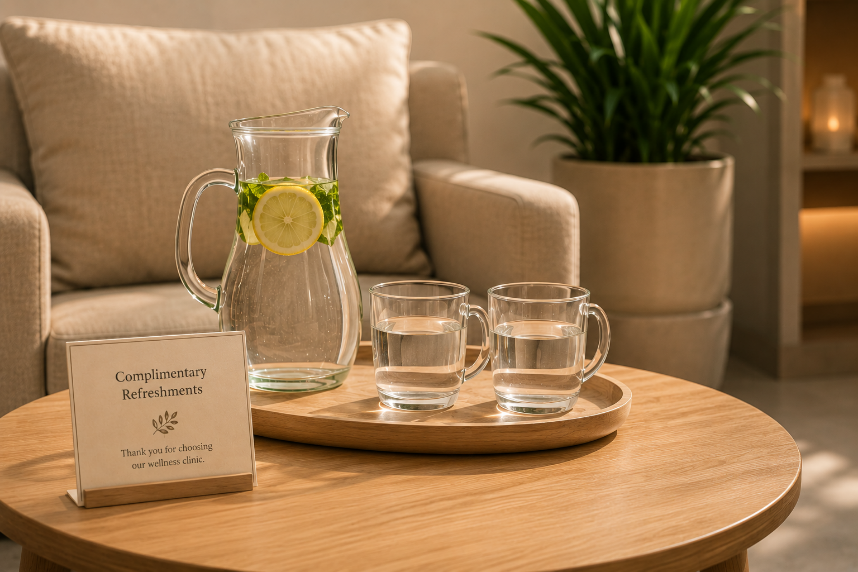
- Offering refreshments
- Personalized greetings
- Comfortable seating
- Thoughtful amenities
- Reduced waiting times
- Seamless administrative processes
Guests may forget specific procedures, but they rarely forget how an experience made them feel.
Creating Psychological Ownership
One reason guests repeatedly return to certain places is the development of psychological attachment.
Environmental psychology research shows that people form stronger emotional bonds with spaces that feel familiar, predictable, and personally meaningful.
Clinics and spas can encourage this by:
- Maintaining consistent design language
- Creating recognizable rituals
- Personalizing interactions
- Remembering guest preferences
- Providing continuity of care
Over time, the facility becomes more than a service provider—it becomes part of the guest’s personal wellbeing routine.
The Role of Scent and Memory
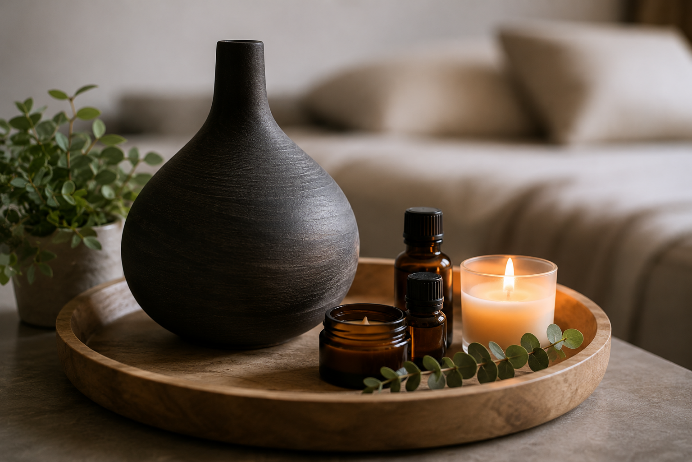
The human olfactory system has direct connections to brain regions involved in emotion and memory.
Studies show that pleasant ambient scents can:
- Reduce perceived stress
- Improve mood
- Increase dwell time
- Strengthen brand recall
Many luxury wellness destinations use signature scents to create distinctive emotional associations.
However, subtlety is essential. Overpowering fragrances may trigger discomfort or sensitivities.
The objective is to create an atmosphere that feels naturally fresh, clean, and restorative.
Designing for Control and Predictability
Anxiety often arises from uncertainty.
Healthcare environments can reduce stress by increasing a patient’s sense of control.
Research has found that perceived control improves satisfaction and emotional wellbeing.
Examples include:
- Transparent communication
- Clear scheduling information
- Intuitive navigation
- Comfortable waiting environments
- Choice in treatment settings when possible
When people understand what is happening and what to expect next, they feel safer.
Measuring Success beyond Revenue
The most successful healing sanctuaries measure more than financial performance.
They monitor:
- Patient satisfaction
- Return visitation rates
- Referral rates
- Time spent in facility
- Online reviews
- Emotional feedback
These metrics often reveal whether a facility is creating genuine trust and psychological comfort.
Trust, after all, is one of the strongest predictors of long-term loyalty.
Modern private clinics and wellness spas have an extraordinary opportunity to redefine the patient experience.
Scientific evidence from neuroscience, environmental psychology, healthcare design, and hospitality research consistently points toward the same conclusion: people heal better, trust more deeply, and return more often when they feel safe.
The most successful facilities of the future will not resemble traditional medical institutions. They will feel like sanctuaries—places where architecture, service, nature, light, sound, and human connection work together to calm the nervous system and support wellbeing.
In a world increasingly characterized by stress and uncertainty, creating environments that foster psychological safety may become one of the most powerful forms of care a clinic or wellness spa can offer.